Warped Hallway Floor Traced to a Corroded Pipe Behind the Toilet
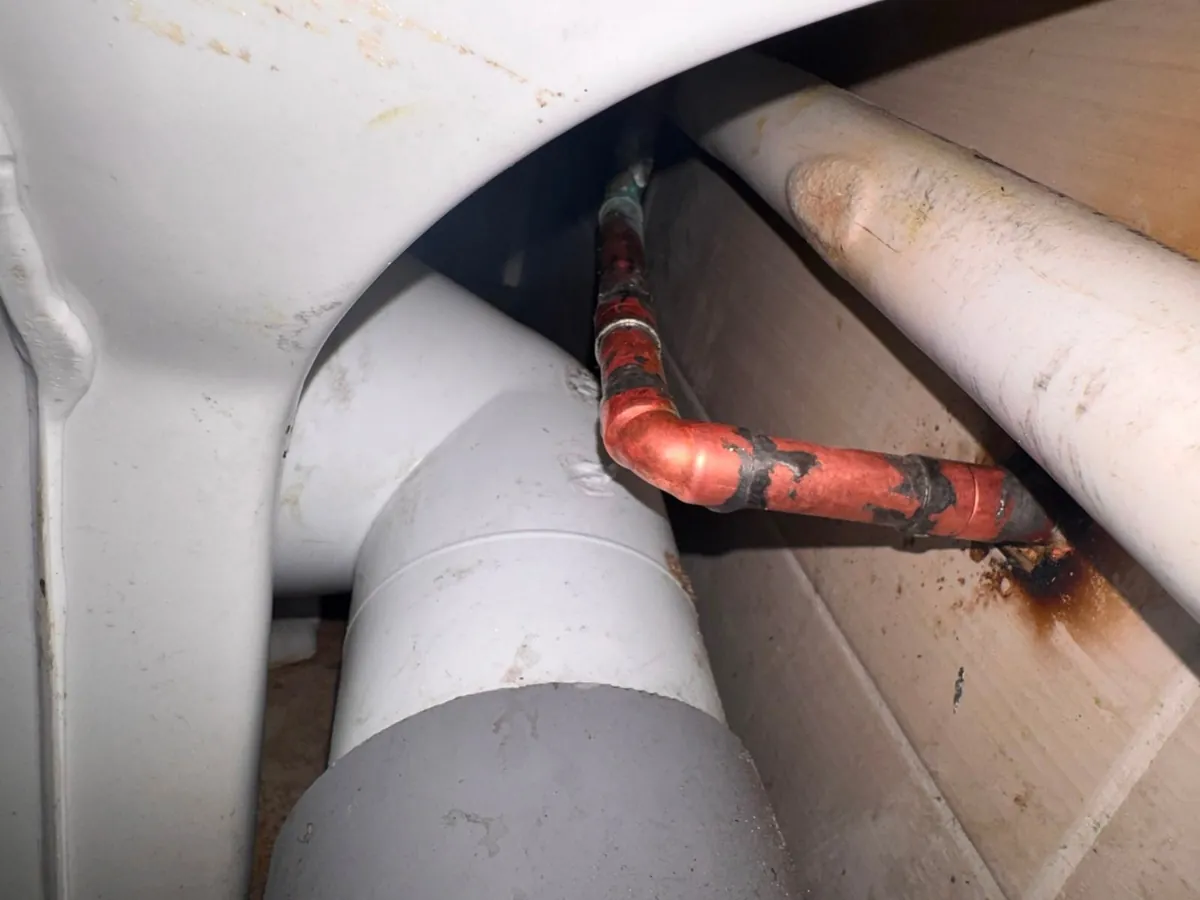
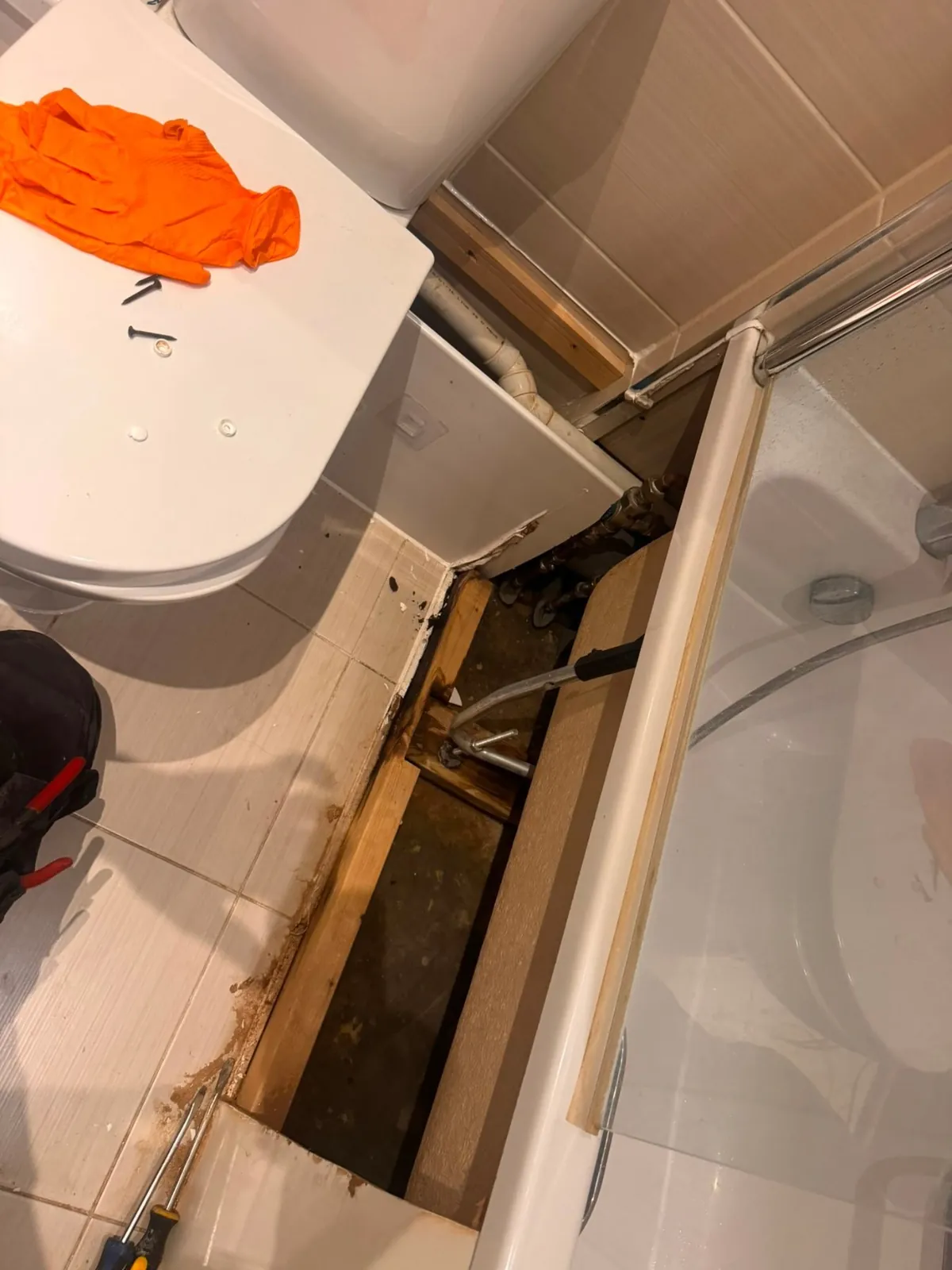
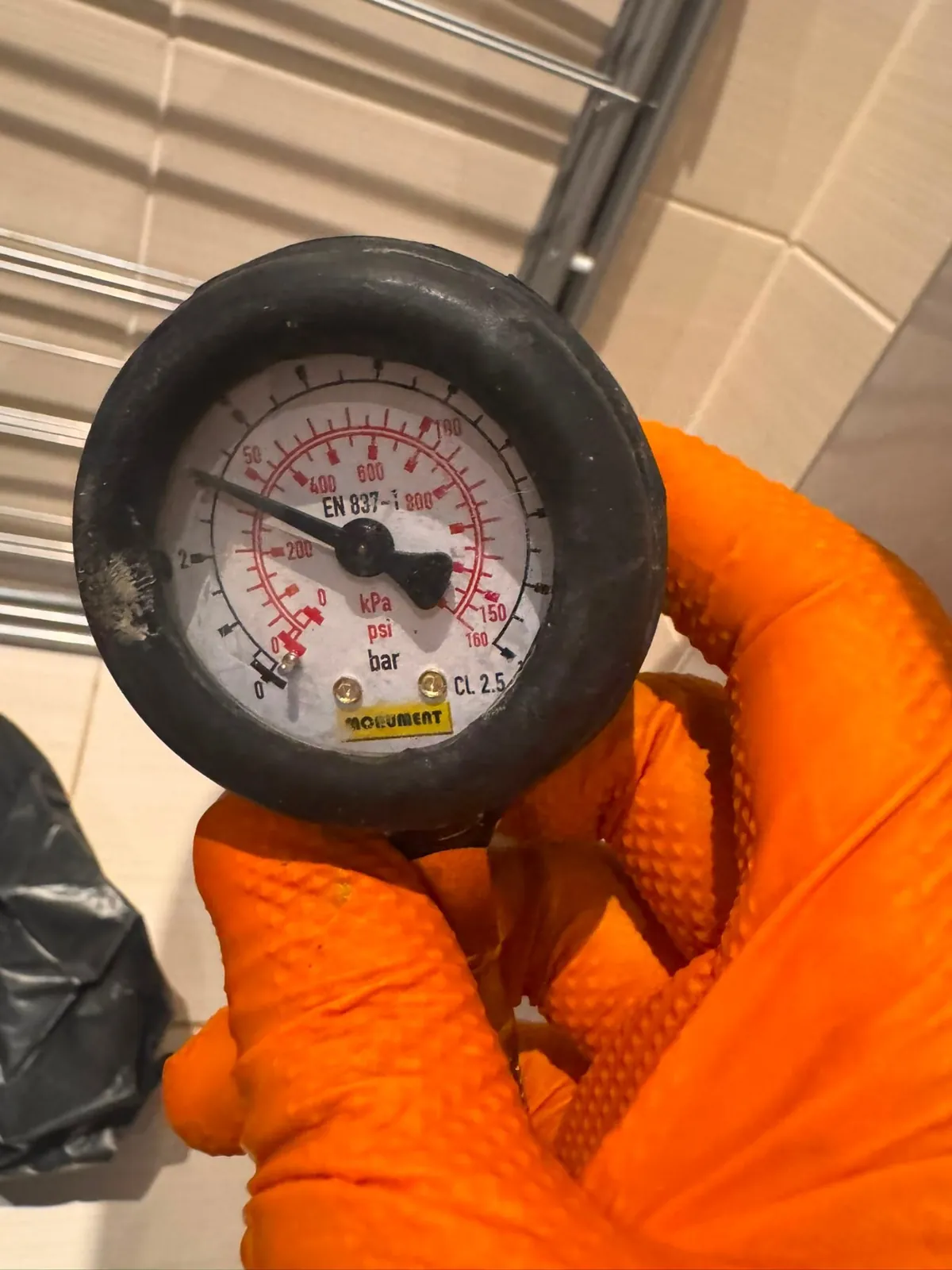
Warped hallway floorboards were the only sign. A pressure test and an access panel at the bath led to a corroded 15 mm cold supply pipe hidden behind the toilet pan connector by the access board. The photographs show the pipe, the opened void and the pressure gauge.
Job record
- District
- N16, Hackney
- When
- August 2026
- Property
- Home with warped hallway floorboards and a bathroom nearby
- Seen
- Warped floorboards in the hallway.
- Methods
- pressure test
- trace and access
- Found
- A corroded 15 mm cold supply pipe behind the toilet pan connector, hidden by the access board.
- Outcome
- Located inside the property
Is the water coming from inside or outside?
A warped hallway floor was the only symptom, and the first question was whether the water was coming from inside the home at all. Floor damage can come from rain, from a drain or from a pipe, and the work began by deciding which.
Hallway boards warp when they take up water or dry unevenly, so the hallway was where the water had shown, not necessarily where it started. The guide on where leaking water travels explains why the two are often a room apart.
What the water had done to the bathroom and floor
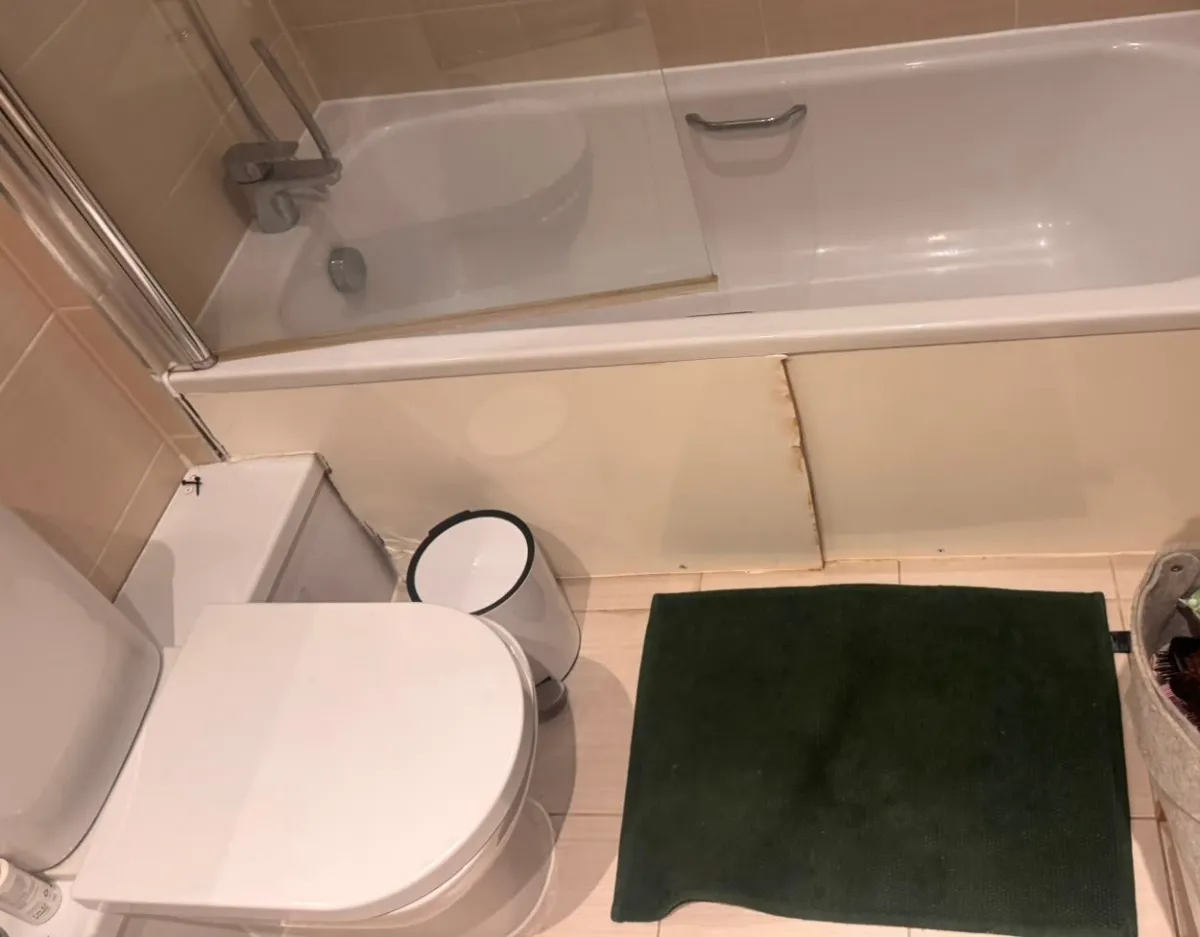
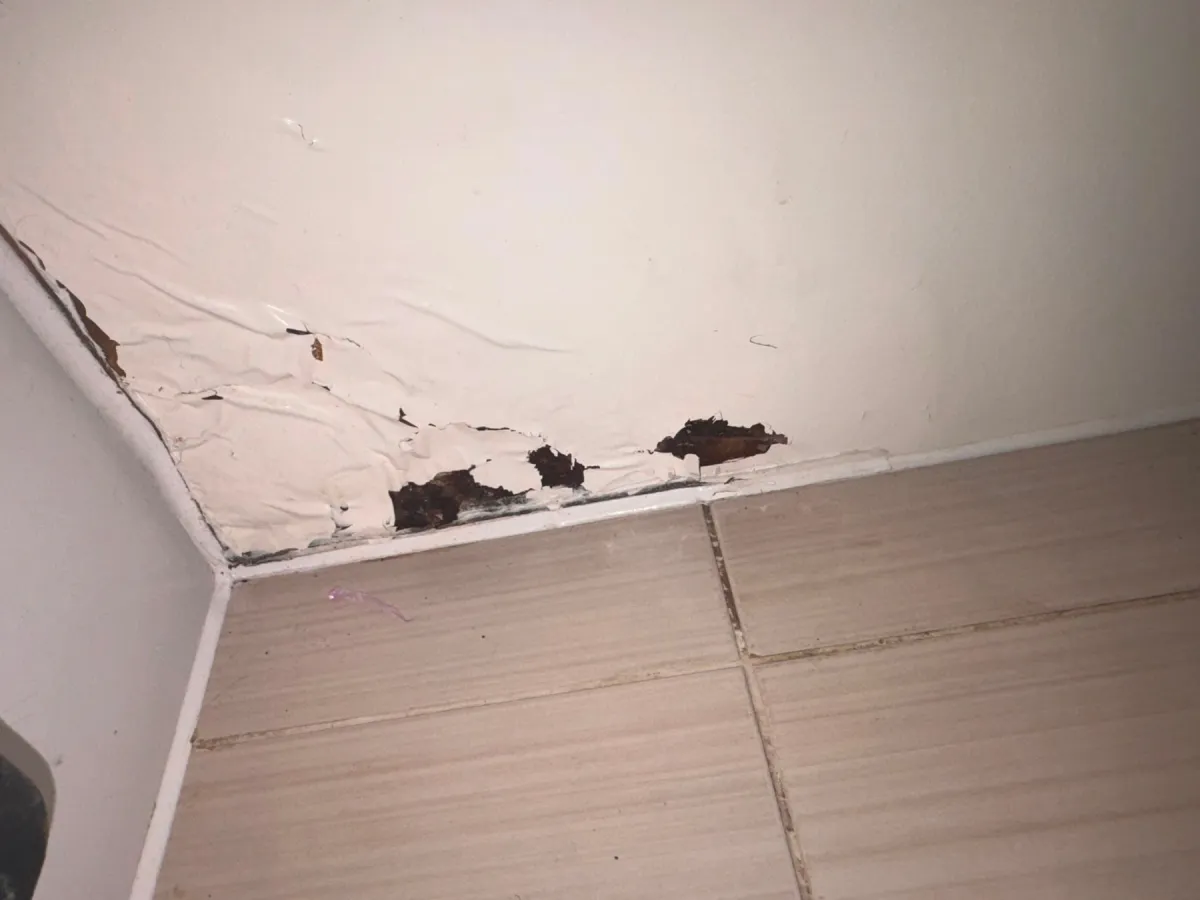
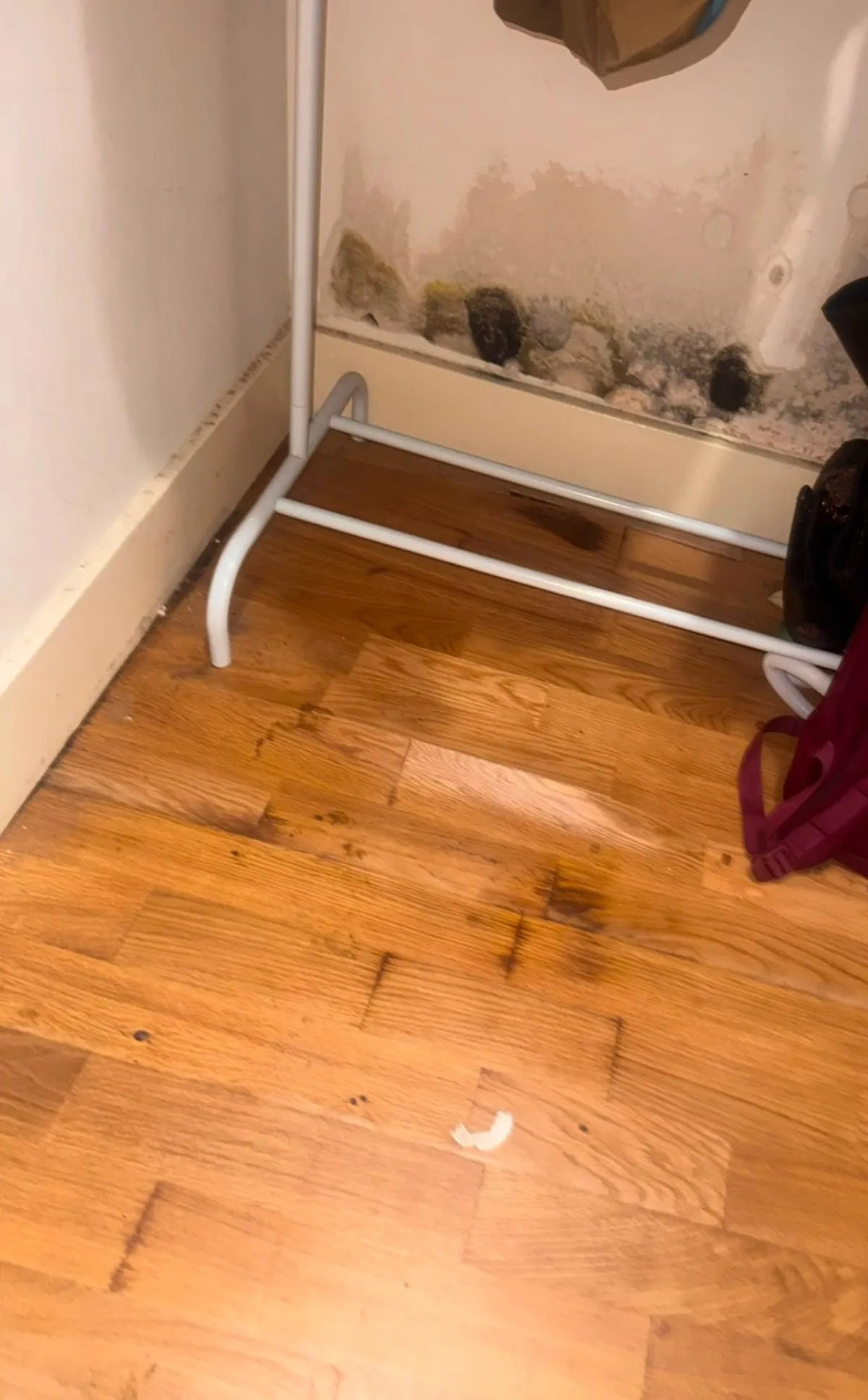
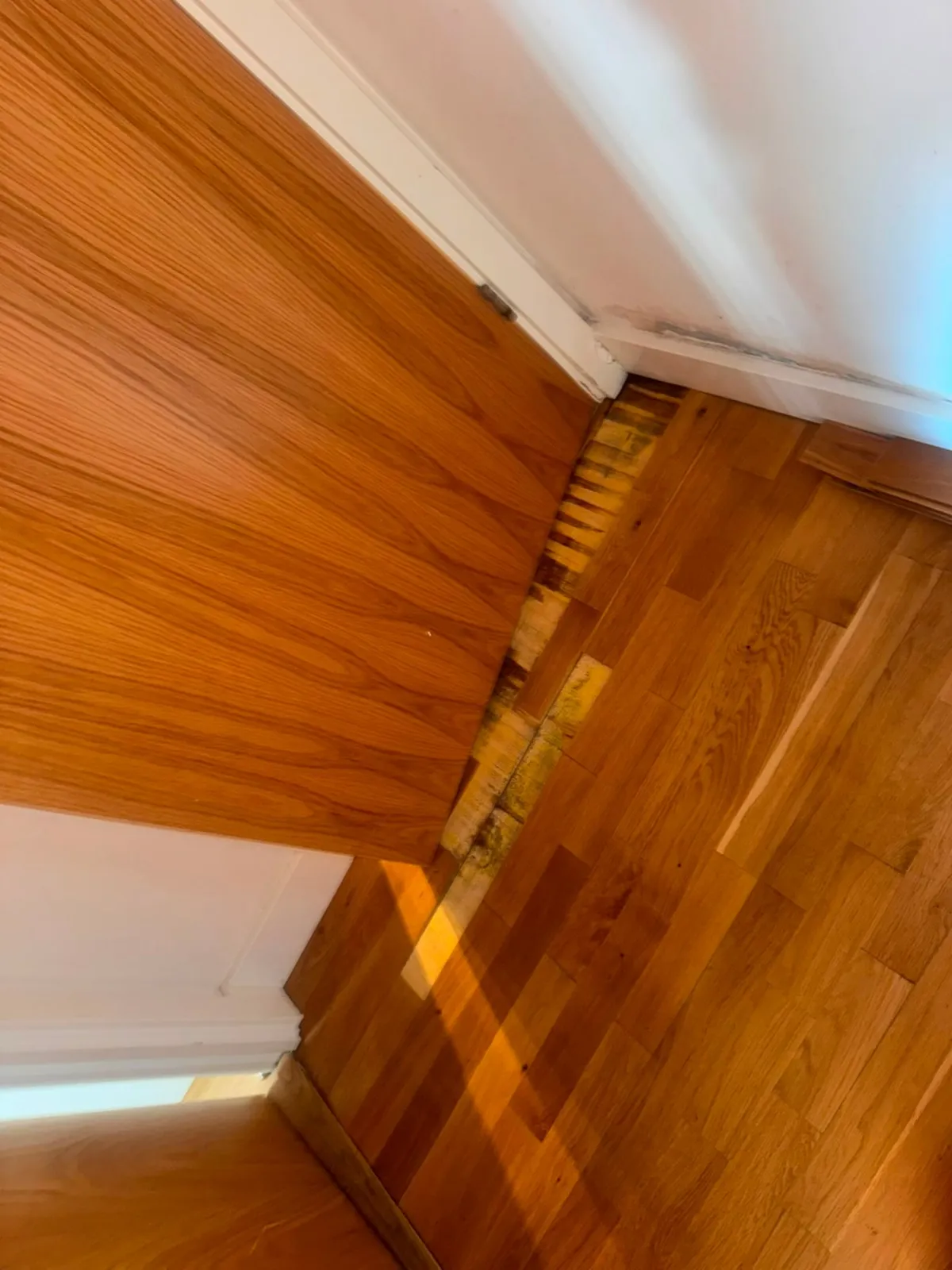
Before anything was opened, the home showed the damage in four places, and the photographs record each. The bath side panel had a brown stain running down the join between its two sections. At the foot of a wall next to the wet area, paint had bubbled and lifted off the plaster with dark brown patches showing through. In the adjoining cupboard the wall had dark patches and a tide mark above the skirting, and the boards below were darkened. Nearby, wood floor boards had lifted and their exposed edges were stained yellow-brown.
Each of these says that water had reached that spot, not where it started. The record lists exactly this set of signs: a raised floorboard, dampness in the cupboard, moisture around the bath panel and damp patches on the floor next to the wet area. Marks in several places are a reason to test the supply before opening anything. Warped or raised wooden floors explains how timber shows water, and bath panel swelling and staining covers the panel.
What the pressure test said
A pressure test on the supply was the way to decide, and the gauge in the photograph is the instrument for it: water is held in the pipework at pressure, and if the needle falls, the pipework is losing water somewhere. What a pressure gauge tells you goes through the reading.
A falling gauge says that a leak exists and not where. In this job the pressure test and an access panel at the bath together led to the pipe.
The bath panel and the void
The bath side panel was removed to reach the void beside the toilet, as the photograph shows, with an orange glove and loose screws on the toilet lid. A bath panel is a way in that needs no cutting (what you find behind a bath panel walks through the void), and it is the same idea as a trace and access survey: open the smallest place that gives a line of sight.
What the panel opened to was only part of the story, because the pipe that mattered was hidden by something as ordinary as a board.
Corrosion behind the pan connector
Behind the toilet pan connector, the pipe was found: a corroded 15 mm cold supply, hidden from view by the access board. The photograph shows tarnished copper with an elbow running beside the pan and its grey waste connector, and staining at the far end of the pipe.
Corrosion at that spot is a leak that lives out of sight; the green crust on copper fittings guide shows what a weeping joint looks like when it can be seen. Without the panel off and the board out of the way, the pipe is effectively invisible, and the only symptom was a floor that warped somewhere else.
The section of pipe that was cut out
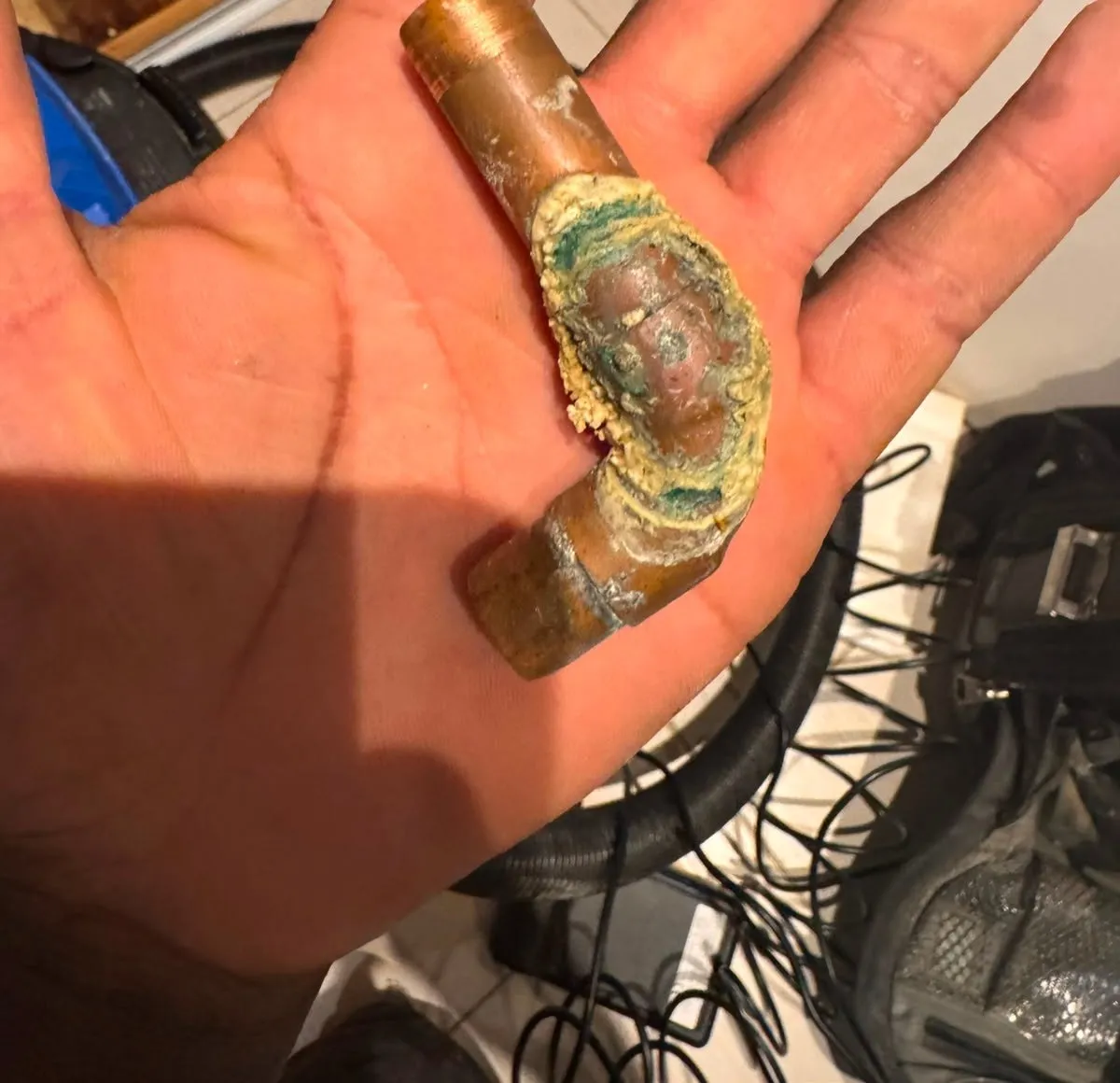
The repair on this job was to isolate the supply, drain down, cut out the leaking section of 15 mm pipe and fit a new section with suitable fittings. The photograph shows a piece of copper with an elbow and a thick crust around the bend, green where copper has reacted and cream where deposits have built up. Seeing the part itself is the clearest evidence that the pipe, and not the floor, was the fault.
After the supply was restored, the repaired system was pressure tested and monitored. The record notes no further pressure loss, no visible leakage and a dry repaired pipe, and that the toilet supply worked. A test that holds after the repair is what separates a fixed leak from a hidden second one, which is why the gauge appears at both ends of the job.
Drying takes weeks, not days
The record advises letting the floor, the cupboard and the bath panel areas dry fully, with monitoring over four to six weeks. How long a wall or floor takes to dry varies, as how long a wet wall takes to dry explains, and drying out a property after a leak sets out the order of work. Leak repair after detection covers how repairs follow a finding.
That drying period is the part people skip. A warped board is a result of the water that was there, and judging the floor straight after a repair mistakes the aftermath for the cause. Four to six weeks of monitoring is how a repair is shown to have held, and a 14-day readings log shows what a falling trend looks like. If a floor warps and you cannot see why, the fixed-price package covers one property, on no find, no fee terms.
About this example: it is written from a visit recorded in the operator’s own job records, made before Leak Experts London was launched. Leak Experts London is a new company with no trading history, so this page shows how a search was carried out and is not evidence of the company’s own track record.
Questions customers ask
Can a warped floor be a sign of a leak?
Yes, among other things. Rain, drains and a pipe can all warp boards. On this job a pressure test showed a loss in the supply and the search led to a corroded pipe near the bathroom, away from where the floor showed it.
Why was the corroded pipe hard to find?
It was behind the toilet pan connector, hidden by the access board. Its only visible effect was a warped hallway floor elsewhere, so the search started with a pressure test and a panel opening, not a camera or a gas test.
How long should a floor be left to dry after a leak is stopped?
The record for this job advises letting the floor, the cupboard and the bath panel areas dry fully, with monitoring over four to six weeks. How long any other floor needs depends on the damage, so it should be judged on readings.