Leak guides
How to Detect a Water Leak in Your House: A Room-by-Room Walk
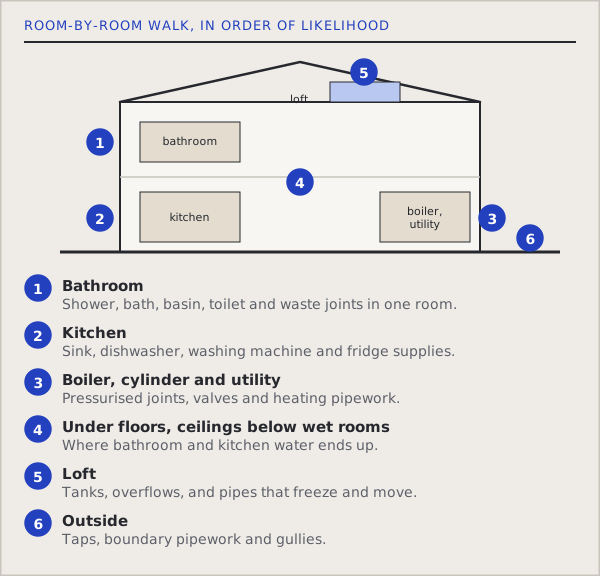
To detect a water leak in your house, walk it room by room with a torch, a dry tissue and a cheap thermometer, starting where leaks are most likely: bathroom…
all of Greater London, 24/7
A damp patch, a stain or a bill that keeps climbing usually has one of a few causes. Each guide says what the sign usually means and what is safe to check yourself. Start with the signs of a hidden leak or a leak you cannot find, or choose your room.
Nothing matches. Clear the filter to see all 8.
To detect a water leak in your house, walk it room by room with a torch, a dry tissue and a cheap thermometer, starting where leaks are most likely: bathroom…
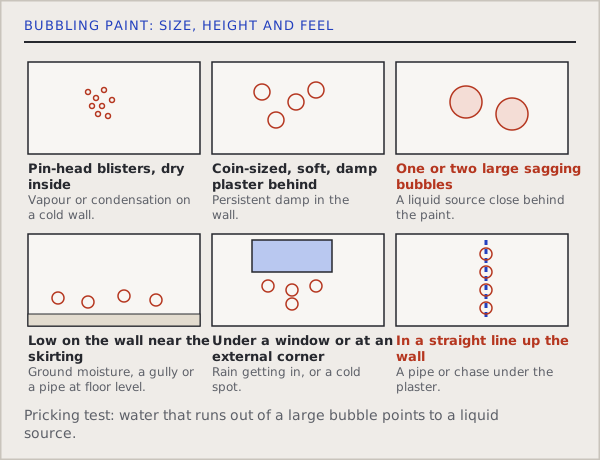
Paint bubbles when water, or water vapour, gets behind the film and pushes it off the plaster. Small clusters usually mean vapour or condensation. A few large…
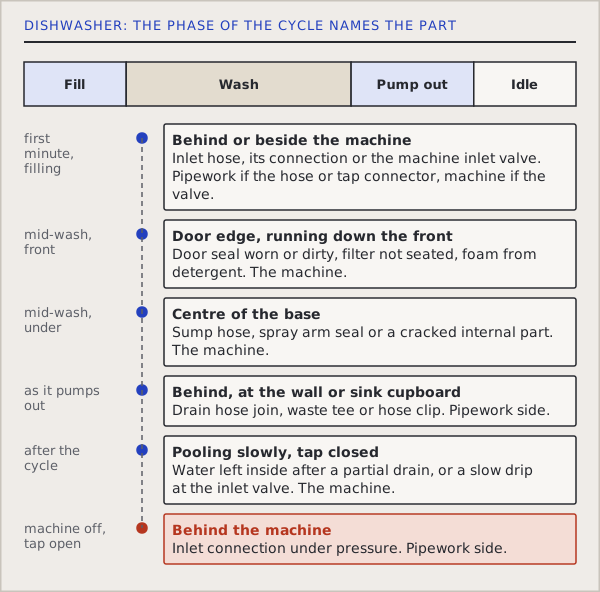
A dishwasher leaking from the bottom is machine, inlet pipework or waste pipework, and the timing separates them. Water at the start of a cycle points to…
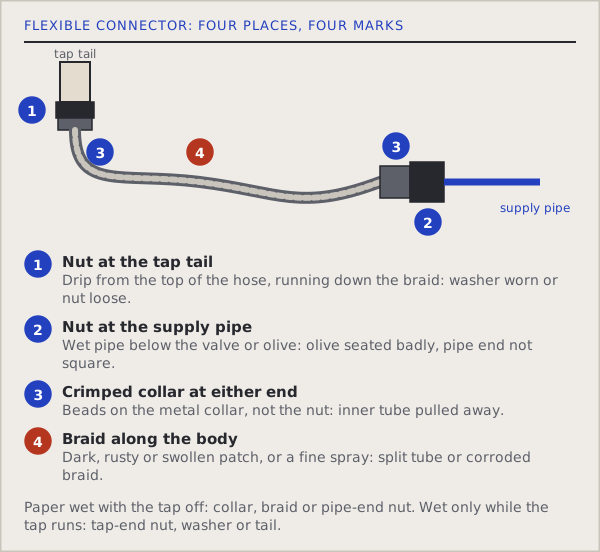
A flexible tap connector leaks at one of four places: the nut at the tap, the nut at the supply pipe, the crimped collar, or the braided body itself. Each…
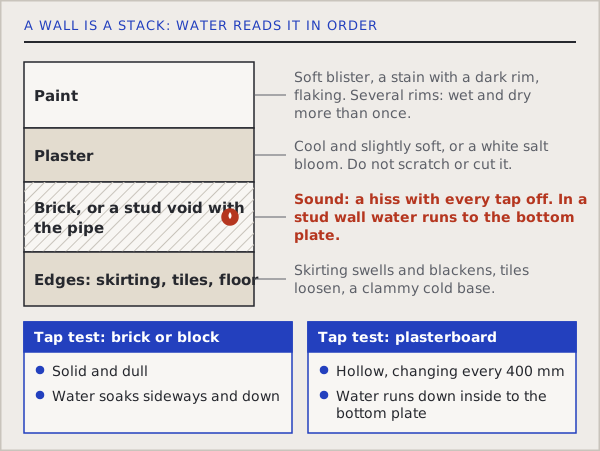
A leak in a wall shows through its layers, outermost first: paint blisters or stains, plaster goes soft, cold or dark, skirting and tile joints discolour, and…
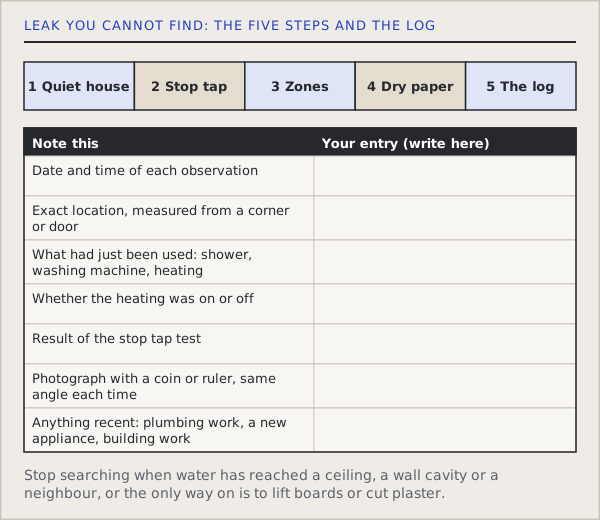
If you know water is escaping but cannot see it, work through five safe checks: confirm the leak is real, sort it into supply, waste or heating, isolate…
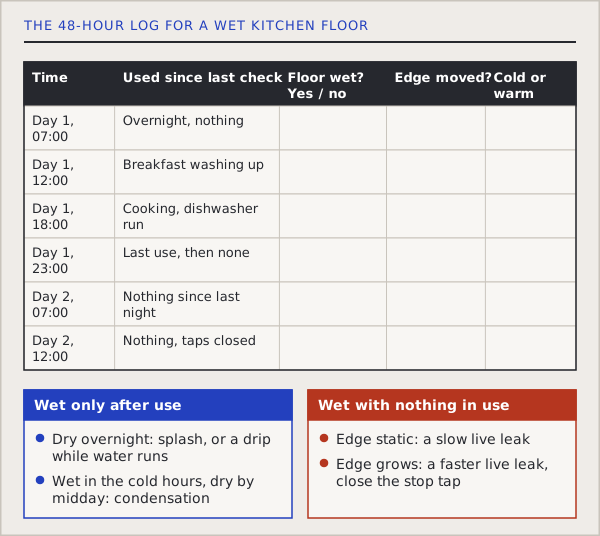
A kitchen floor that is wet near the sink with no obvious leak is usually splash, condensation, a slow drip or a hidden pipe. A two-day log separates them: dry…
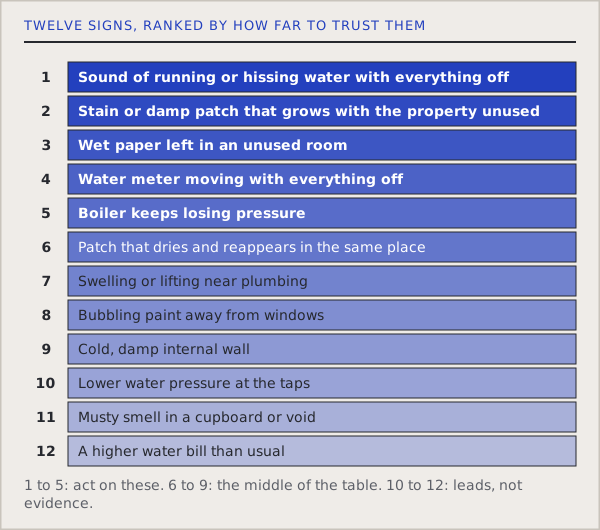
The most reliable signs of a hidden water leak are the ones that change while nobody is using water: a stain that grows, a sound that continues, a patch that…