Leak Into the Flat Below: Not the Dishwasher, but the Pipework Under the Bath
A leak into the flat below was blamed on a recently installed dishwasher. The dishwasher and the kitchen tap were checked and cleared. Water was then found pooled under the bath, around the waste and inlet pipework where earlier silicone had failed. The water was isolated to the bathroom and no permanent repair was made on the visit.
Job record
- District
- SW11, Wandsworth
- When
- September 2026
- Property
- Flat with a bathroom above the flat below
- Seen
- Signs of a leak in the flat below, with a recently installed dishwasher the first suspect.
- Methods
- trace and access
- Found
- The dishwasher, kitchen tap, basin and visible bath fittings showed no leak. A significant amount of water had collected under the plastic cover beneath the bath, and the probable source was the waste and inlet pipework there, where earlier silicone had failed.
- Outcome
- Located inside the property
The dishwasher was the obvious suspect
A dishwasher had been installed not long before the flat below reported a leak, so it was the first thing blamed. That is a reasonable guess and a common one: a new appliance is the most recent change, and a dishwasher hose leaking behind the unit is a real cause of water in the flat below.
The water supply was isolated and each possible source was checked in turn. The dishwasher supply hose and connection were checked and the appliance was run, and nothing escaped. The kitchen tap was opened and watched, and the basin and the visible bath fittings were examined too. None of them leaked.
What the kitchen floor showed
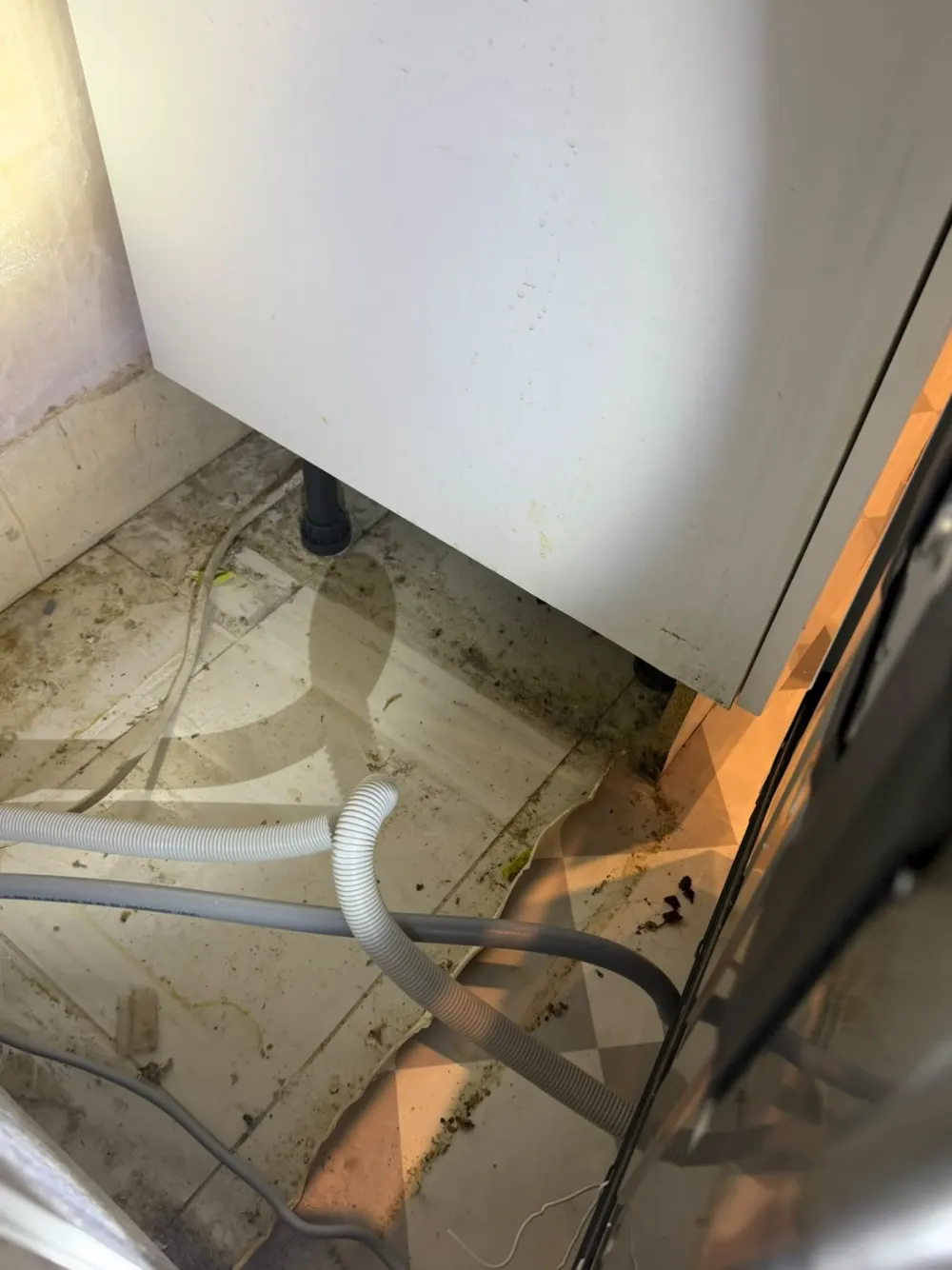
The first photograph shows the floor beside the dishwasher cabinet, with the dishwasher hoses lying across it. It is there because it records what was ruled out: the hoses were looked at, and the dishwasher was cleared.
A clear result matters in a leak into the flat below because it saves a wrong repair. Replacing a healthy dishwasher hose would have cost money and left the real leak running. A wet area in the flat below can have more than one candidate above it, and each needs its own yes or no.
Staining in the room below
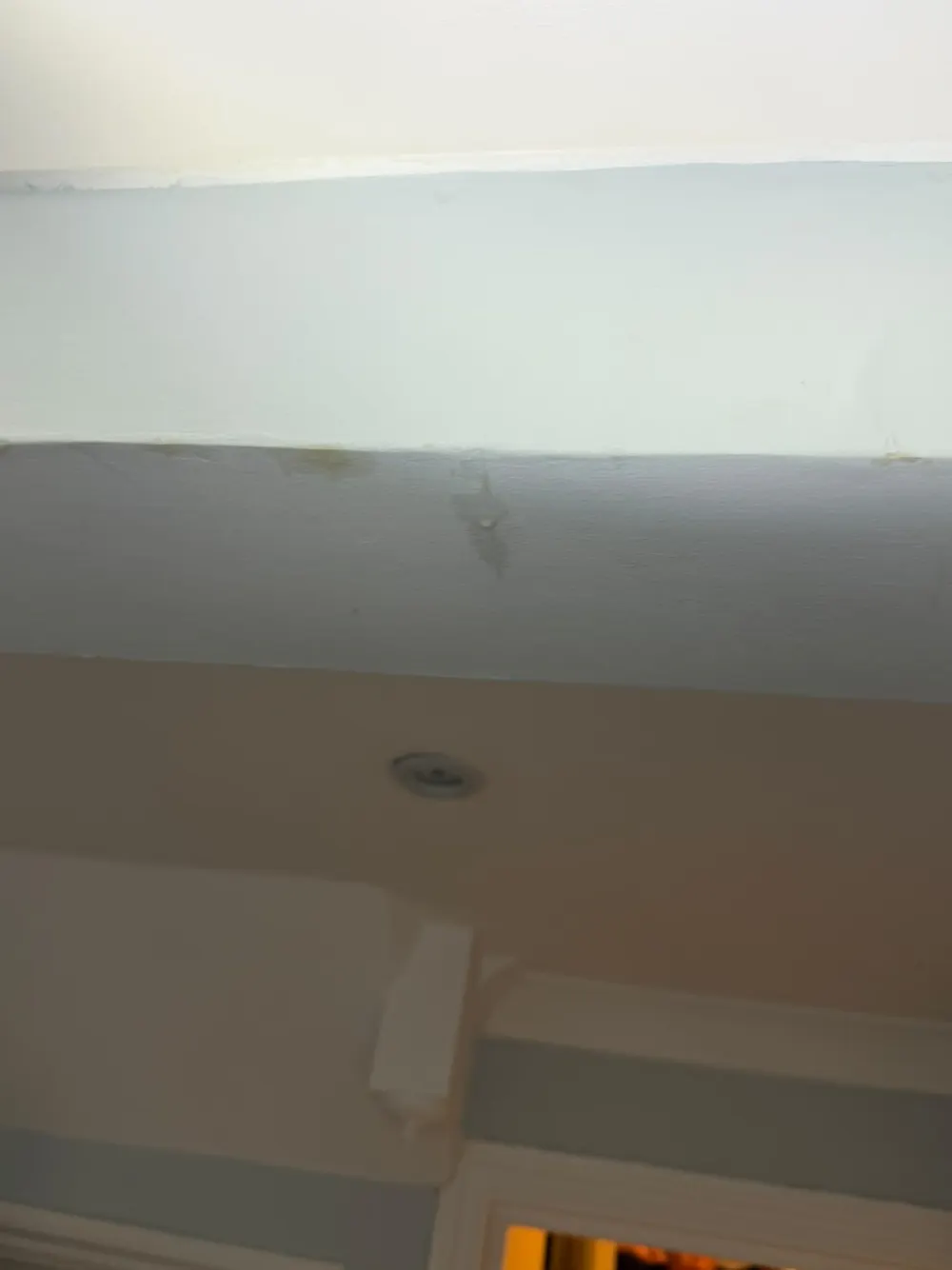
The second photograph shows a pale water stain and flaking paint on a wall just below a ceiling edge. It is the kind of mark that brings a leak to attention, and a water stain on a ceiling is often the first sign a neighbour sees.
A stain like this says that water has arrived. It does not say where it started, because water travels along beams and walls before it shows. The job record does not tie this particular mark to a point in the pipework, so the stain is evidence of damage and the search for the source continued above.
Water under the bath cover
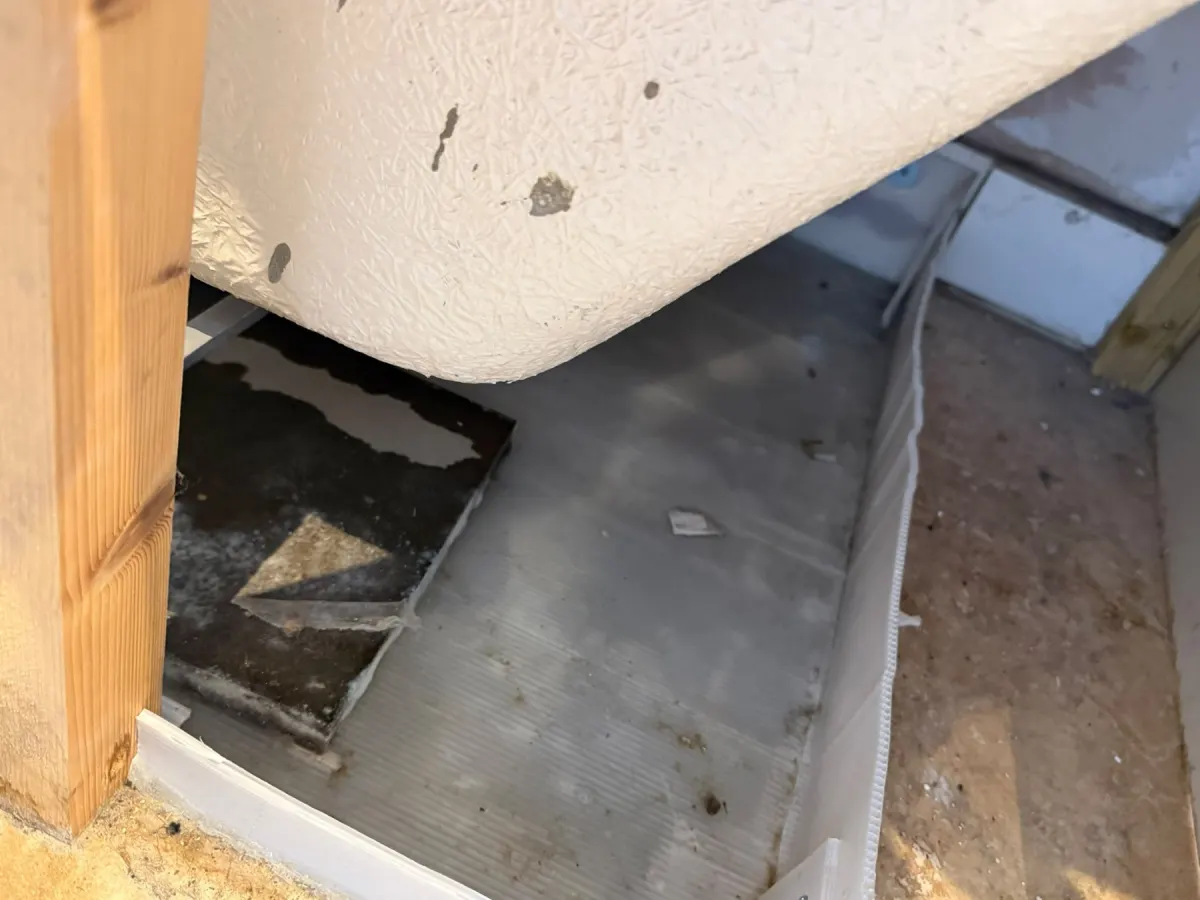
With the primary fixtures cleared, the plastic protective cover under the bath was removed to see the concealed pipework. A considerable volume of water was pooled beneath it. The void photograph shows the underside of the bath and the stained base below it. This is trace and access in practice: the cause was behind a panel, so the panel had to come off.
The pipework under the bath includes the waste outlet and the inlet supply, and both showed moisture. Silicone had been applied around portions of it earlier, which can be a sign of a previous attempt to seal the area, as silicone failure or a pipe leak explains. The report records that the earlier silicone had failed.
The trap and the wet tray
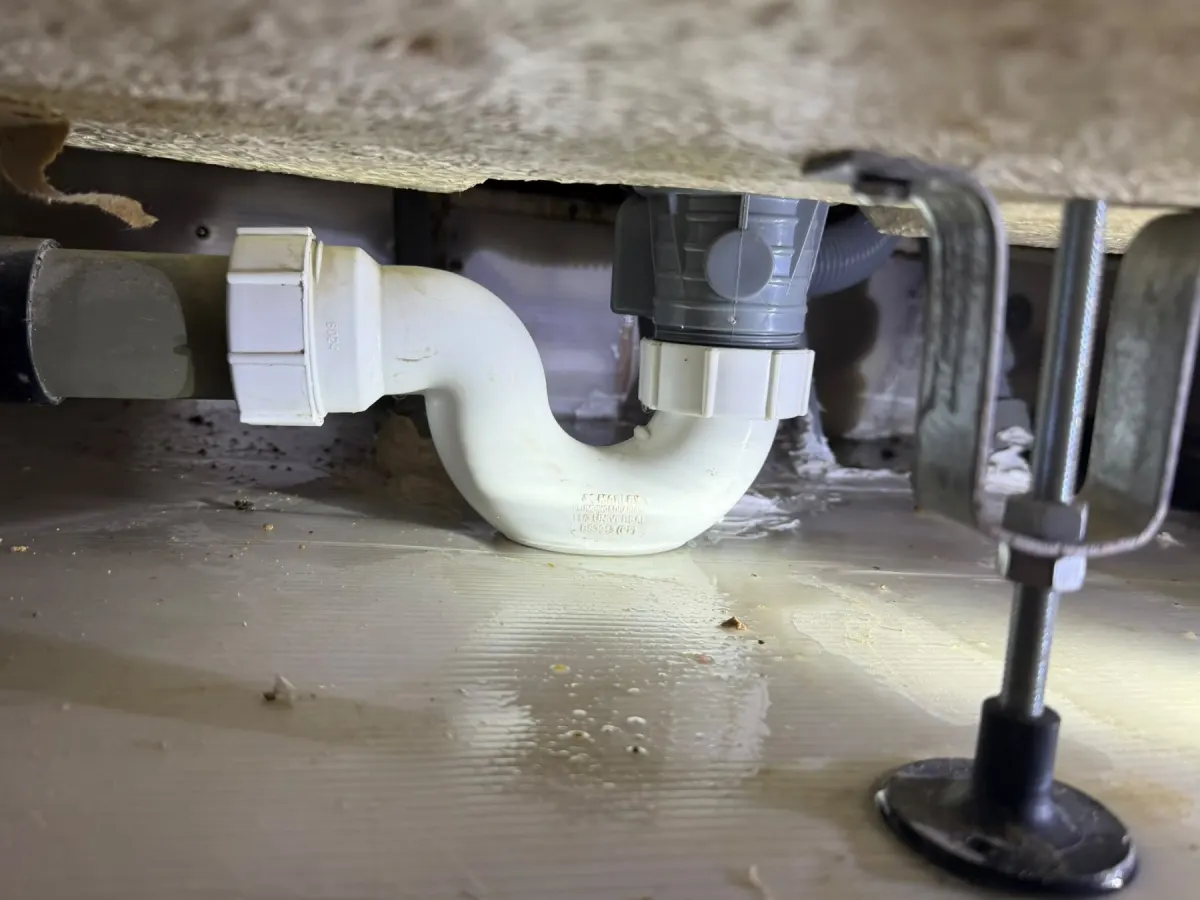
The last photograph shows the white trap and grey waste outlet hanging above a plastic tray with a wet film on its surface. Together with the pooled water and the failed silicone, it led to the conclusion that the leak most likely came from the waste and inlet pipework under the bath. The wording in the report is that the source was probable, and this page keeps to it.
The exact point of failure was not isolated on this visit. It could have been a joint, a segment of pipe or a fitting, and the report says so. A leak under the bath can be hard to pin to one joint until the pipework is fully exposed.
What was done and what was not
The water supply to the bathroom was isolated and the condition of the pipework was documented. No permanent repair was carried out on the visit, because further access was needed. The recommended next steps were to remove the cover and strip the old silicone, inspect the waste and inlet connections, repair or replace any defective parts, and then pressure test the pipework before reinstating the area. This is how leak repair after detection normally follows a finding.
Until that work is done the property stays at risk of further water damage, and the report says that plainly. A repair would also need checking afterwards.
What this case cannot tell you
It cannot say which joint or pipe section failed, how long the water had been escaping, or whether a repair has since worked. The record contains no pressure-test reading, no moisture figures and no result after repair.
In a flat, Landlord and Tenant Act section 11 and the lease decide who pays for repair, so what to do after a water leak at home is the place to start. The fixed-price package covers one property.
About this example: it is written from a visit recorded in the operator’s own job records, made before Leak Experts London was launched. Leak Experts London is a new company with no trading history, so this page shows how a search was carried out and is not evidence of the company’s own track record.
Questions customers ask
Can a new dishwasher cause a leak into the flat below?
Yes, a loose hose or connection can. On this job the dishwasher and its hoses were checked and cleared, so the new appliance was cleared and the search moved on.
Why was the cover under the bath removed?
The bath fittings that could be seen were dry, so the concealed pipework had to be reached. Removing the plastic cover showed a significant amount of water beneath it.
Does silicone around a pipe stop it leaking?
Not reliably. Here, silicone had been applied around the pipework earlier and the report records that it had failed. Silicone can hide a joint without sealing it, so the pipework needs to be opened and inspected.