Toilet Leaks When Flushed: A Soil Pipe Out of Alignment
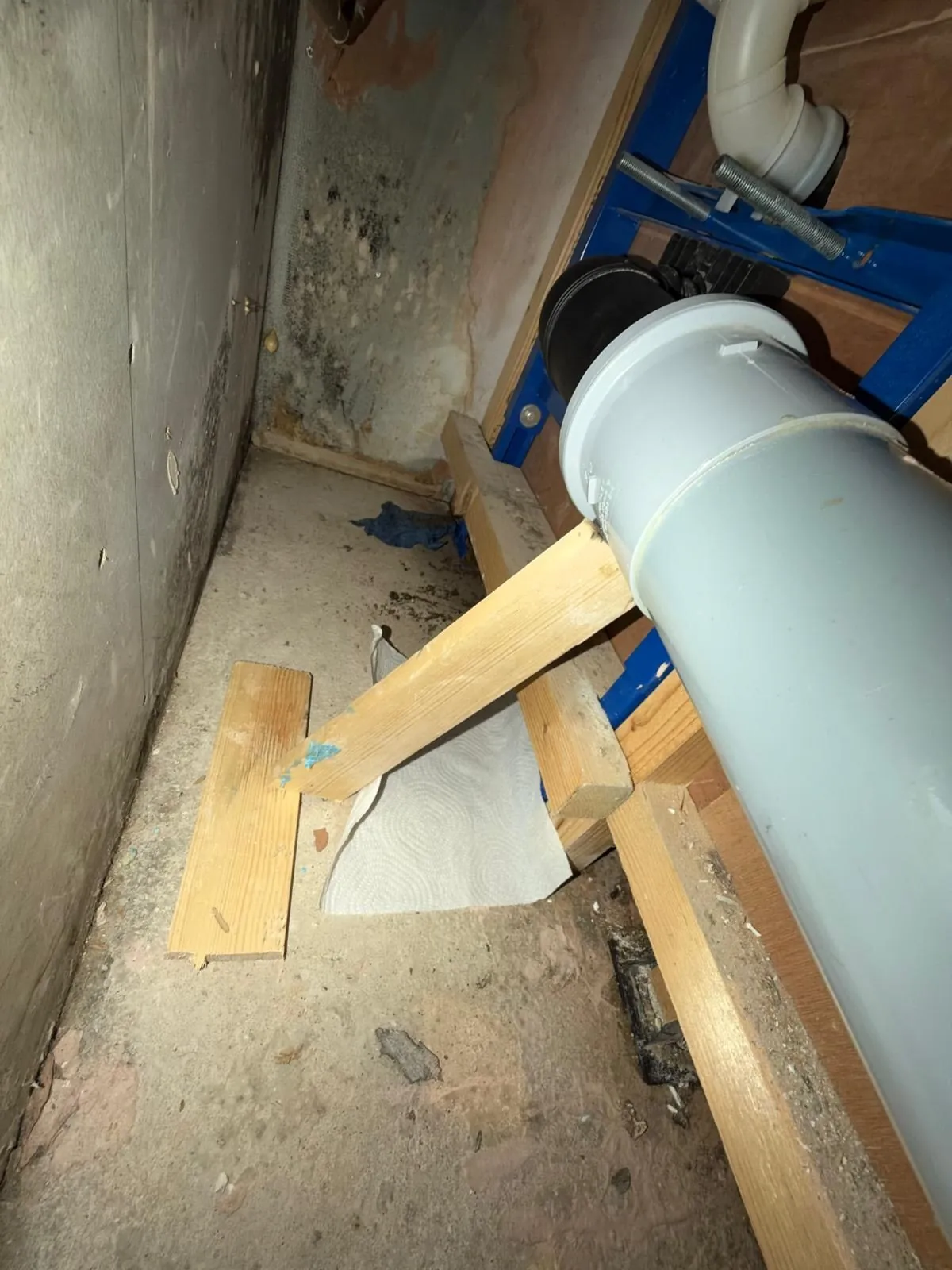
Water dripped at the join between a toilet pan connector and the soil pipe each time the toilet was flushed. The soil pipe was bowing and out of alignment at that join. Cavity insulation next door was soaking wet, a separate source that the report does not blame on the toilet.
Job record
- District
- SW18, Wandsworth
- When
- October 2026
- Property
- Flat with a soil pipe in a service duct and a separating wall to the adjoining flat
- Seen
- Water dripping at the join between the toilet pan connector and the soil pipe whenever the toilet was flushed.
- Methods
- pressure test
- Found
- The soil pipe was bowing and out of alignment at the pan connector join. Separately, cavity insulation and plasterboard in the wall beside the adjoining flat were soaking wet, and the report does not link that to the toilet.
- Outcome
- Located inside the property
A leak that only shows on a flush
The toilet leaked when it was flushed and not otherwise. That kind of leak is easy to miss with a pressure test, because a toilet waste is not a pressurised pipe: it carries water away under gravity, and a joint can look dry for most of the day. The reliable way to see it is to be there at the flush, as in any bathroom leak detection visit.
On this visit active dripping was seen at the join between the pan connector and the soil pipe. Watching a flush reproduced the fault in front of the person looking, and that is better evidence than any reading.
What else was checked
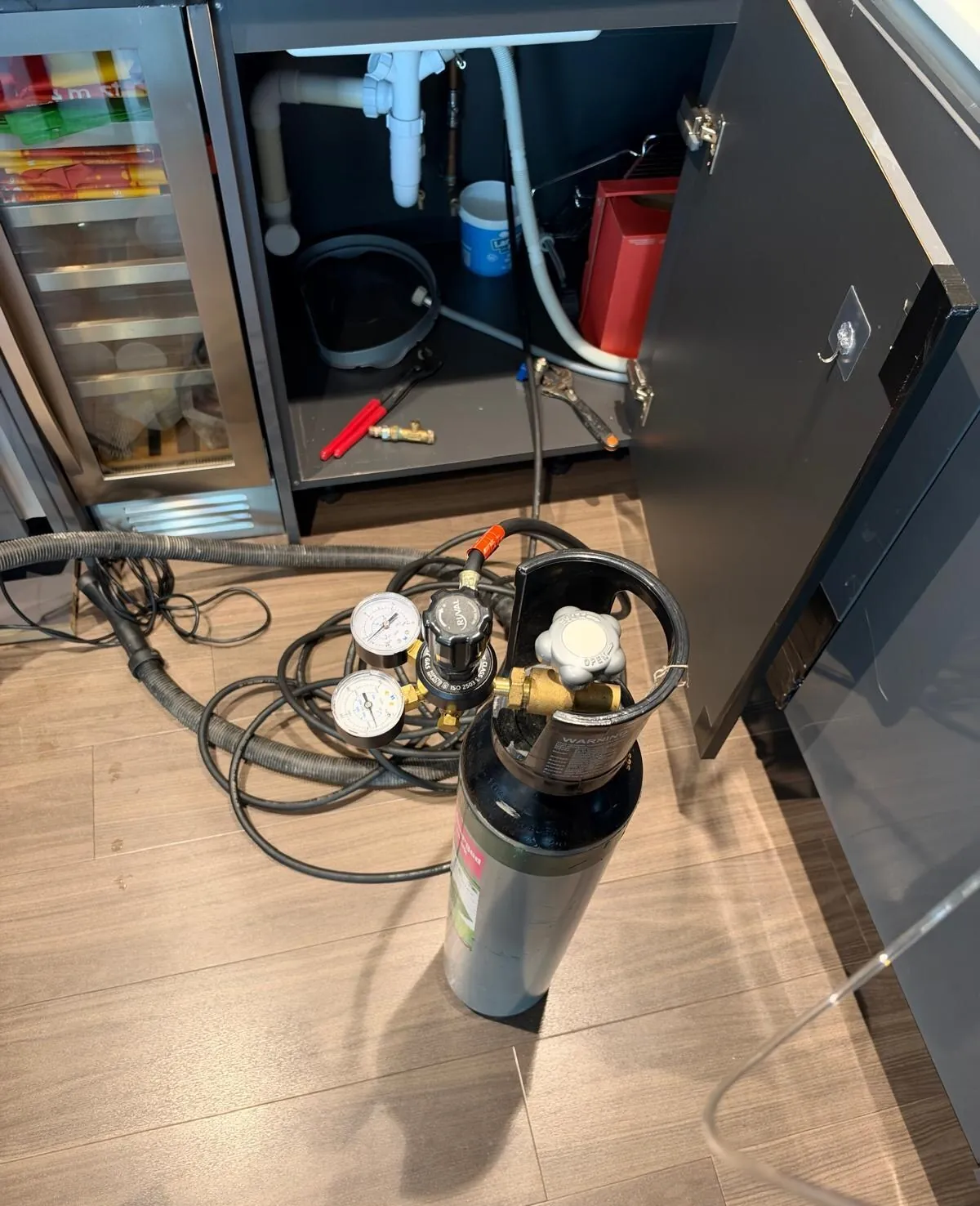
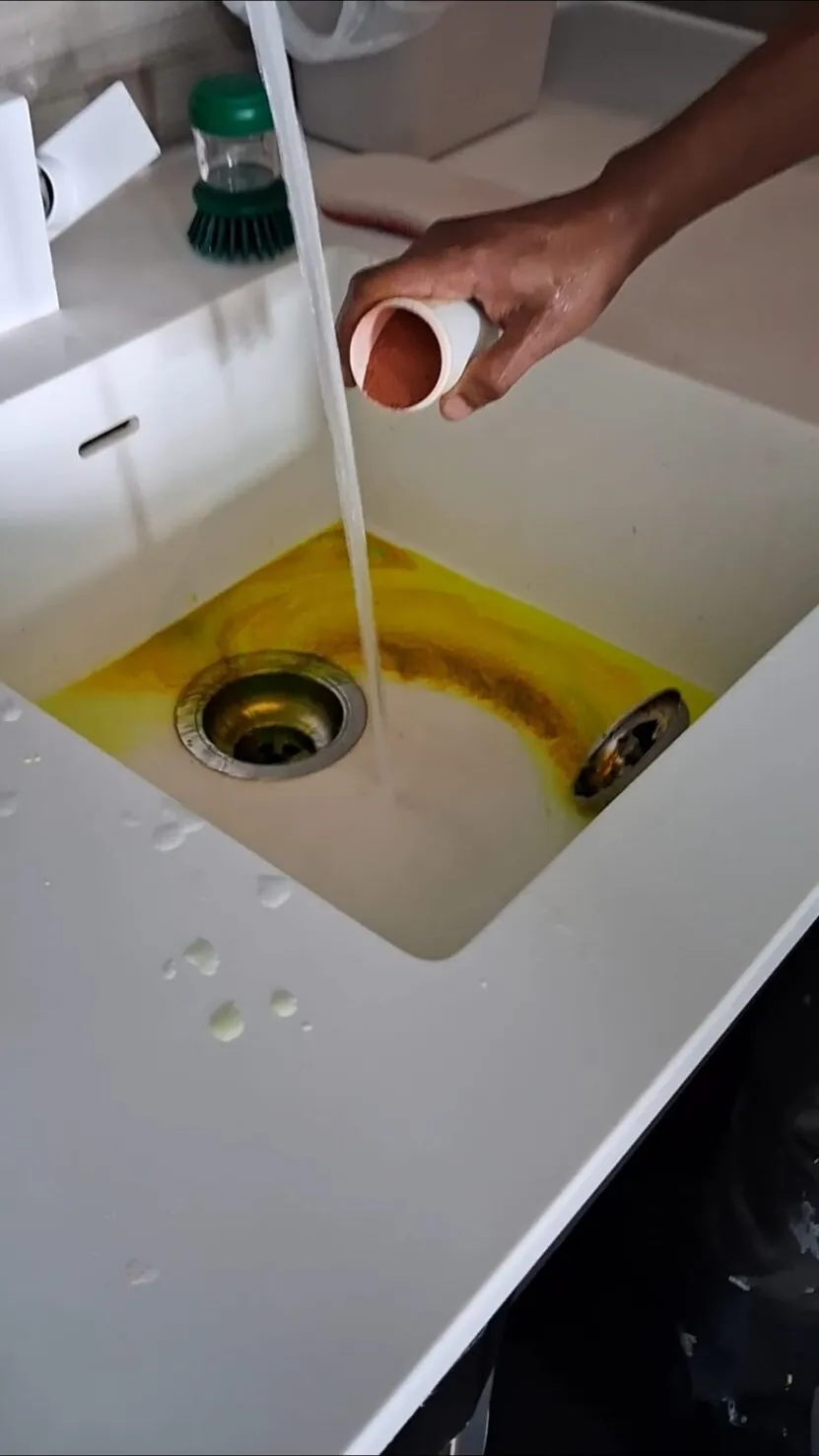
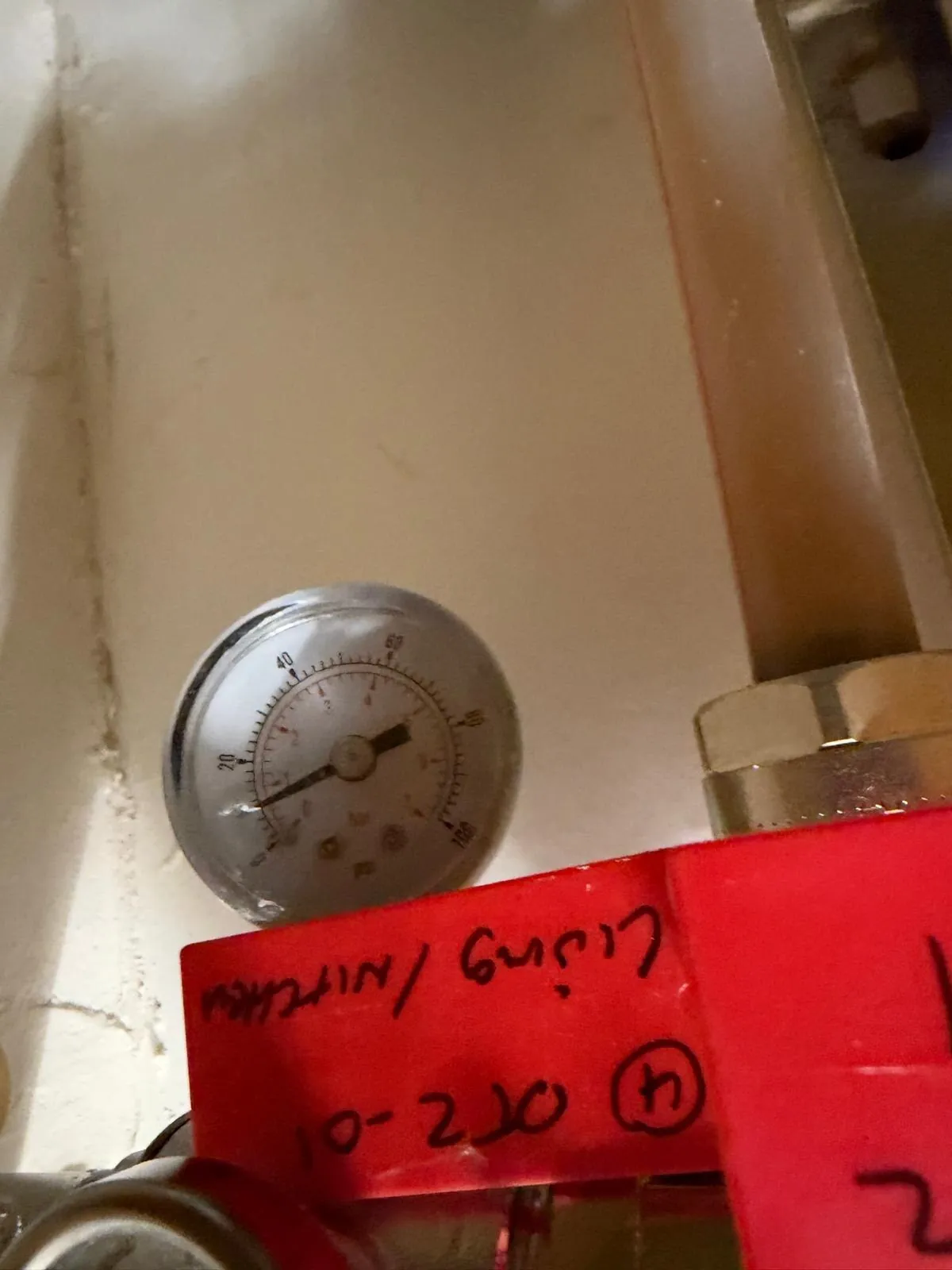
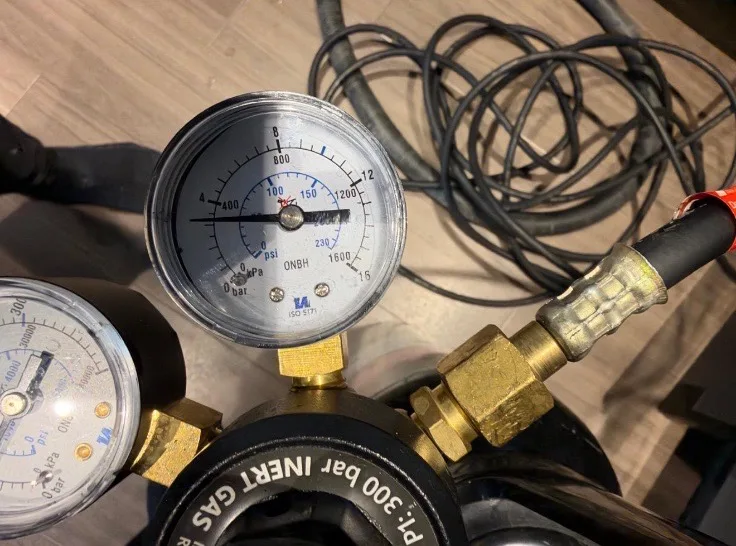
A flush test found the leak, but the water in the building did not all fit it, so other sources were checked. Hot and cold supplies were pressure tested, a gas rig was set up under the kitchen units, and a dye test was run at the kitchen sink. The photographs show the cylinder with its two-gauge regulator, a hand adding dye to running water, and a pressure gauge on a manifold. A closer photograph of the regulator shows its label as inert gas and its two gauges, which is the equipment that feeds gas into pipework under test.
The job record includes photographs of the gas rig and the dye test but gives no reading from the rig and no dye result, so this page does not claim one, and neither method is counted among those used. A dye test follows water from one fitting through its waste.
The soil pipe was out of alignment
In the service duct, the soil pipe was bowing and out of alignment, and the pan connector joint at its end was not seating as it should. The photograph shows the pipe in its duct with timber below it.
Bringing a soil pipe back into line is not described here, and leak repair after detection explains how repairs follow a finding. A pan connector is the fitting that joins the toilet to the soil pipe, and it can only seal if the two ends line up. When the soil pipe moves, the connector is where the movement shows.
The wet wall that stayed unexplained
Cavity insulation and plasterboard in the separating wall next to the adjoining flat were found soaking wet. The report treats this as a separate source, for building management to investigate, and what to do after a water leak at home sets out the first steps. In rented flats, Landlord and Tenant Act section 11 sets out who repairs a leaking pipe. It does not say the toilet leak caused it.
That restraint is worth copying. The toilet leak was real, and it still did not account for all the water. A survey that stops at the first answer would have missed the wall, and a report should say what it could not explain, as how accurate leak detection is describes.
Mould and staining at the foot of the wall
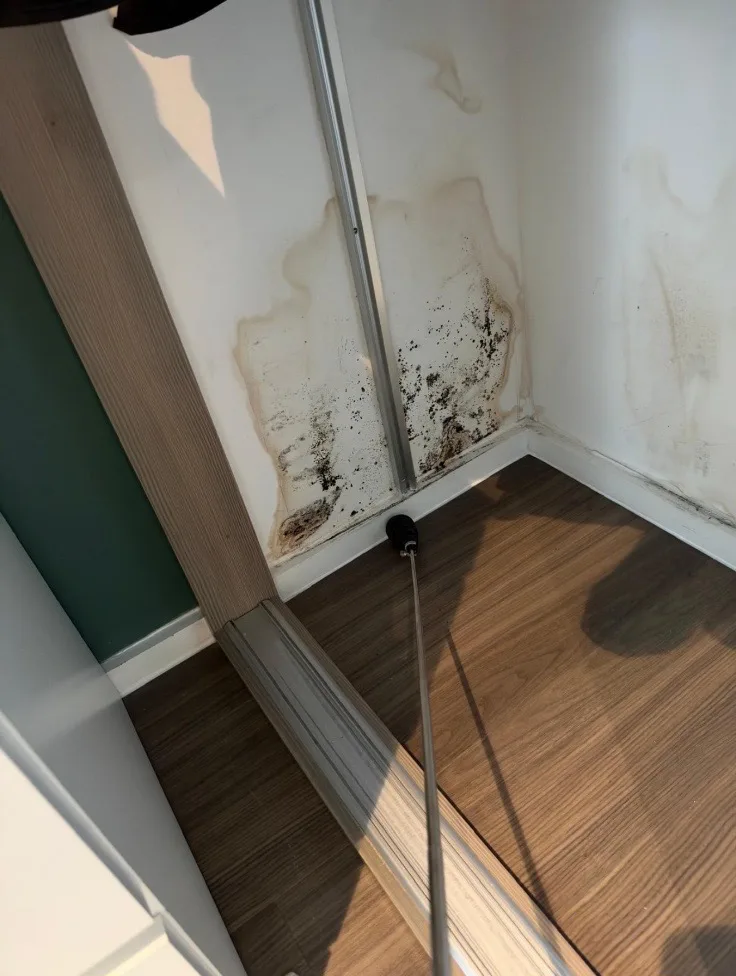
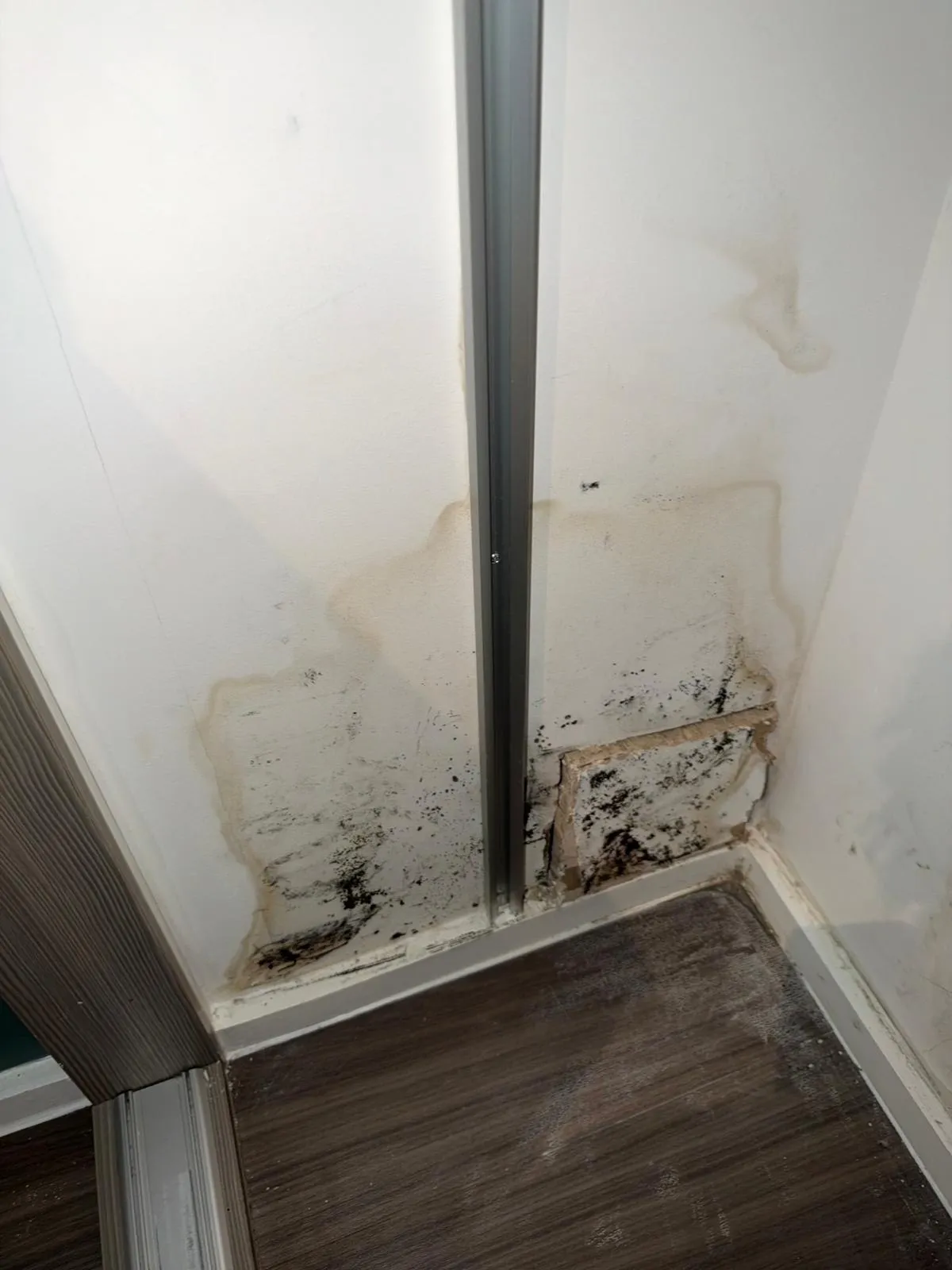
Two photographs show a wall beside a sliding door track. Brown tide marks run up from the skirting and black mould spots the paint, and a long metal probe lies on the floor in one frame. A tide mark is what is left behind when water has wicked up a surface and dried at its edge, so it usually points to wetting that has dried. It does not show where the water came from.
In the second photograph a section of plasterboard has been cut out at the base of the stain, which gives a view behind the surface. Opening the wall is a step taken when the surface alone cannot answer the question. The record does not say how long the marks had been there.
What was behind the plasterboard
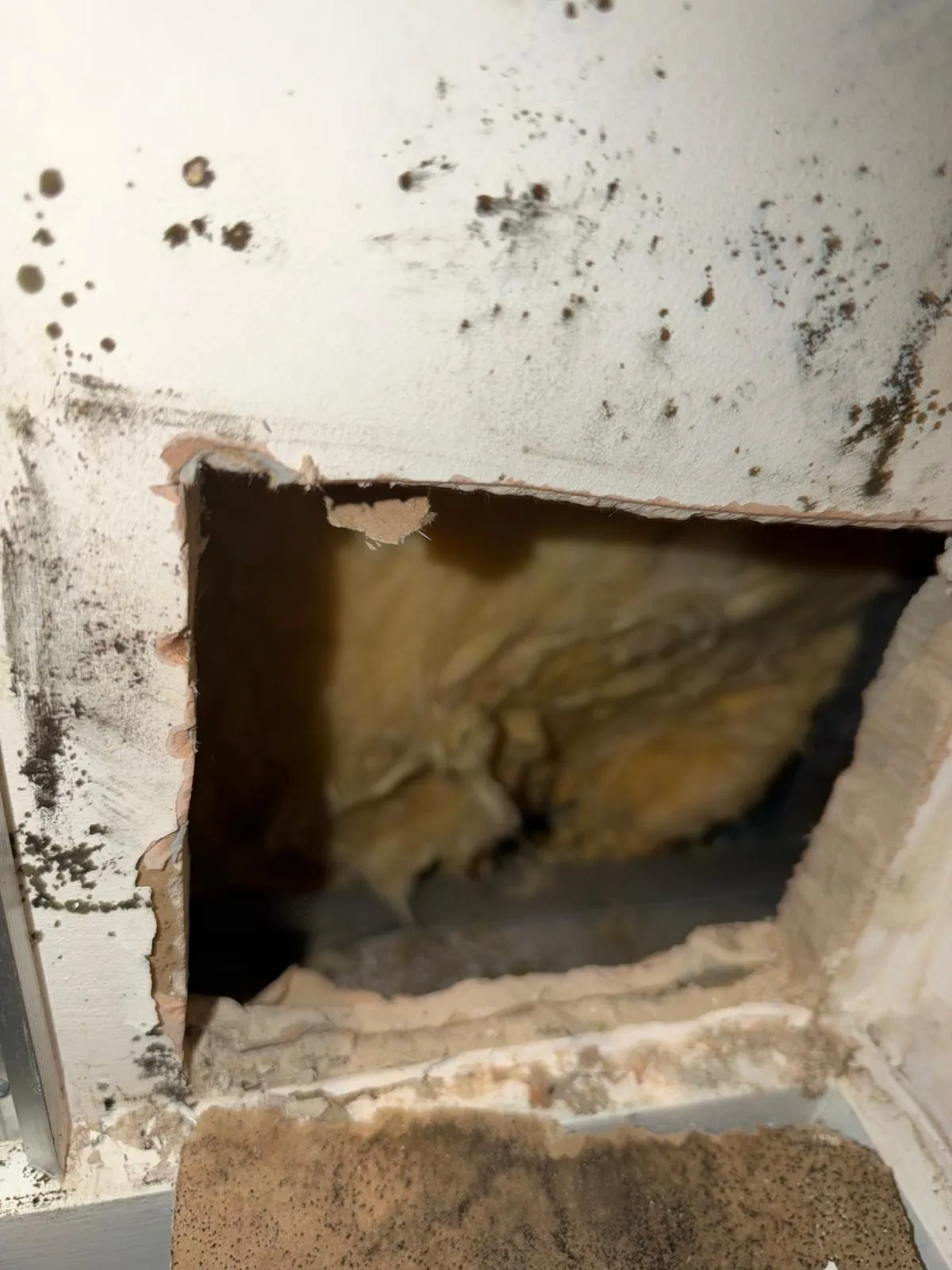
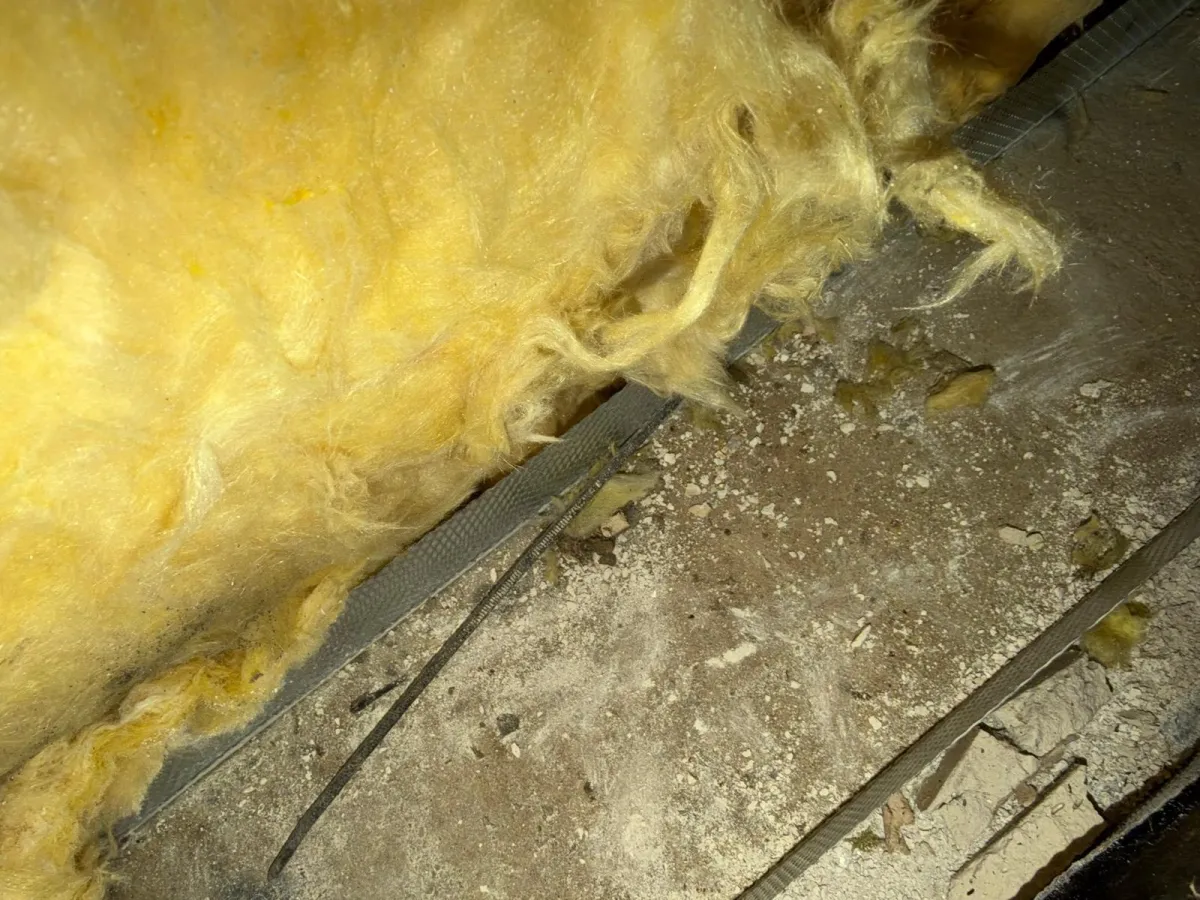
Two close photographs show the inside of the opened wall. The first shows yellow insulation sitting directly behind mould-spotted plasterboard. The second looks into the cavity beside a metal stud, with plaster dust and debris lying on the base plate below.
The record describes the cavity insulation and plasterboard in the separating wall as soaking wet and passed to building management as a separate source. These photographs show the opened wall and its contents but carry no moisture reading, so the images support the description without measuring it. Wet insulation matters because it holds water against the boards and keeps a wall damp long after the original supply has stopped. Locating where that water enters is a job for moisture mapping, which is a different search from the toilet.
What this case cannot tell you
It cannot say how long the soil pipe had been moving, or whether the wet wall was old or new. It also cannot show that a dye test or a gas rig would have found the toilet leak without the flush, because no result from either is recorded.
The toilet that leaks only when flushed guide covers what a householder can safely look for. Anything involving the soil pipe itself should be left to the repair visit. The fixed-price package covers one property.
About this example: it is written from a visit recorded in the operator’s own job records, made before Leak Experts London was launched. Leak Experts London is a new company with no trading history, so this page shows how a search was carried out and is not evidence of the company’s own track record.
Questions customers ask
Why does a toilet leak only when flushed?
A flush sends a surge of water through the pan connector and into the soil pipe. A joint that is slightly out of line can leak only under that surge, which is why this job was solved by watching a flush.
Does fixing one leak mean the damp will stop?
Not necessarily. Here the toilet leak was one finding, yet cavity insulation next to the adjoining flat was still soaking wet and was treated as a separate source. Every wet area needs its own explanation.
Can a dye test find a leaking toilet connection?
A dye test follows water from a sink or other fitting through its waste, so it answers where that water goes. On this job the sink dye test was photographed, the record gives no result for it, and the toilet leak was found by watching a flush.