Case studies · CR8
Shower Waste Pipe Separated From Its Trap, Found With an Endoscope
A leak into the flat below was traced to a shower waste pipe that had come apart from its trap. An endoscope passed through one small opening in the lower…
all of Greater London, 24/7
Staining and active water on the walls of a flat below came from the shower upstairs. The tray had dropped and cracked, the enclosure seal had failed, and there was rot and mould under the tray edge. A failed tray cannot be mended with mastic, so the advice was to take the shower out of use.
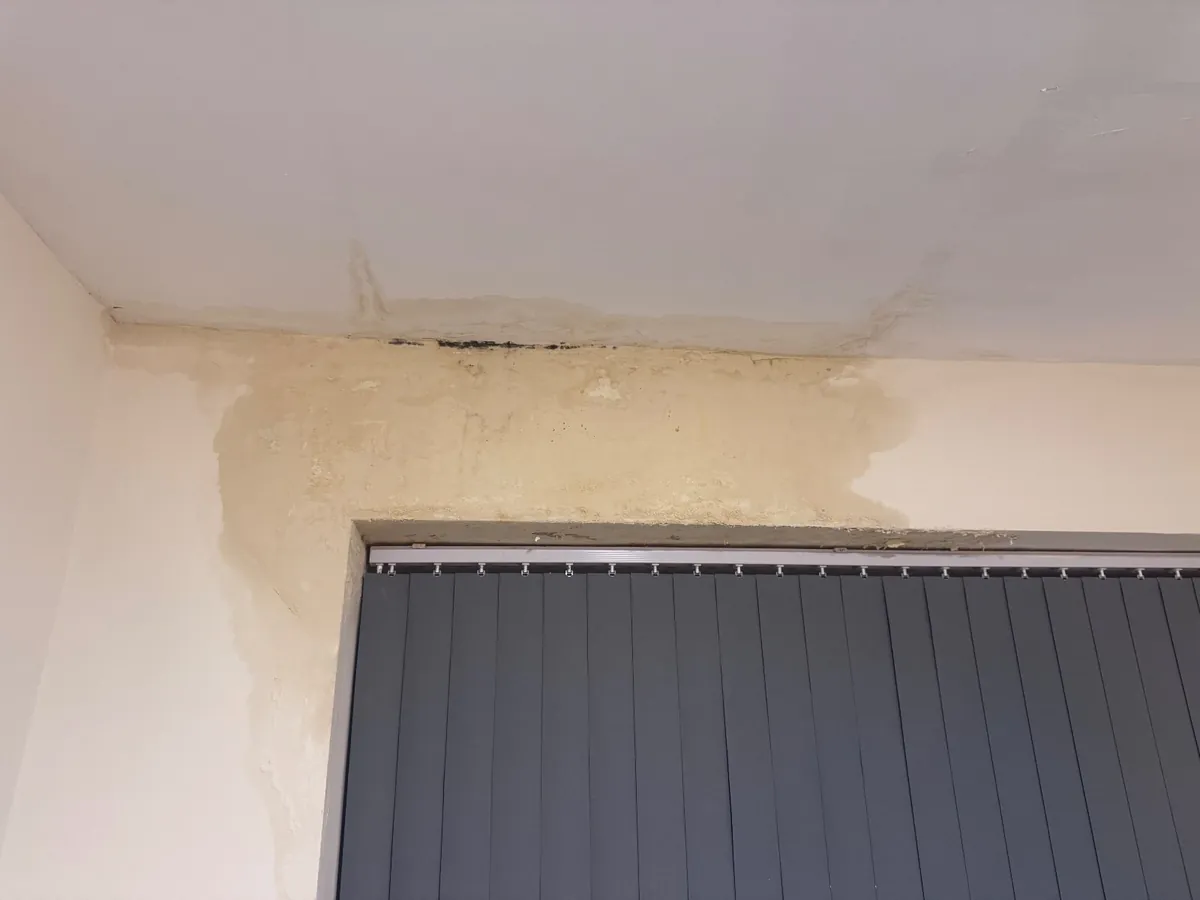
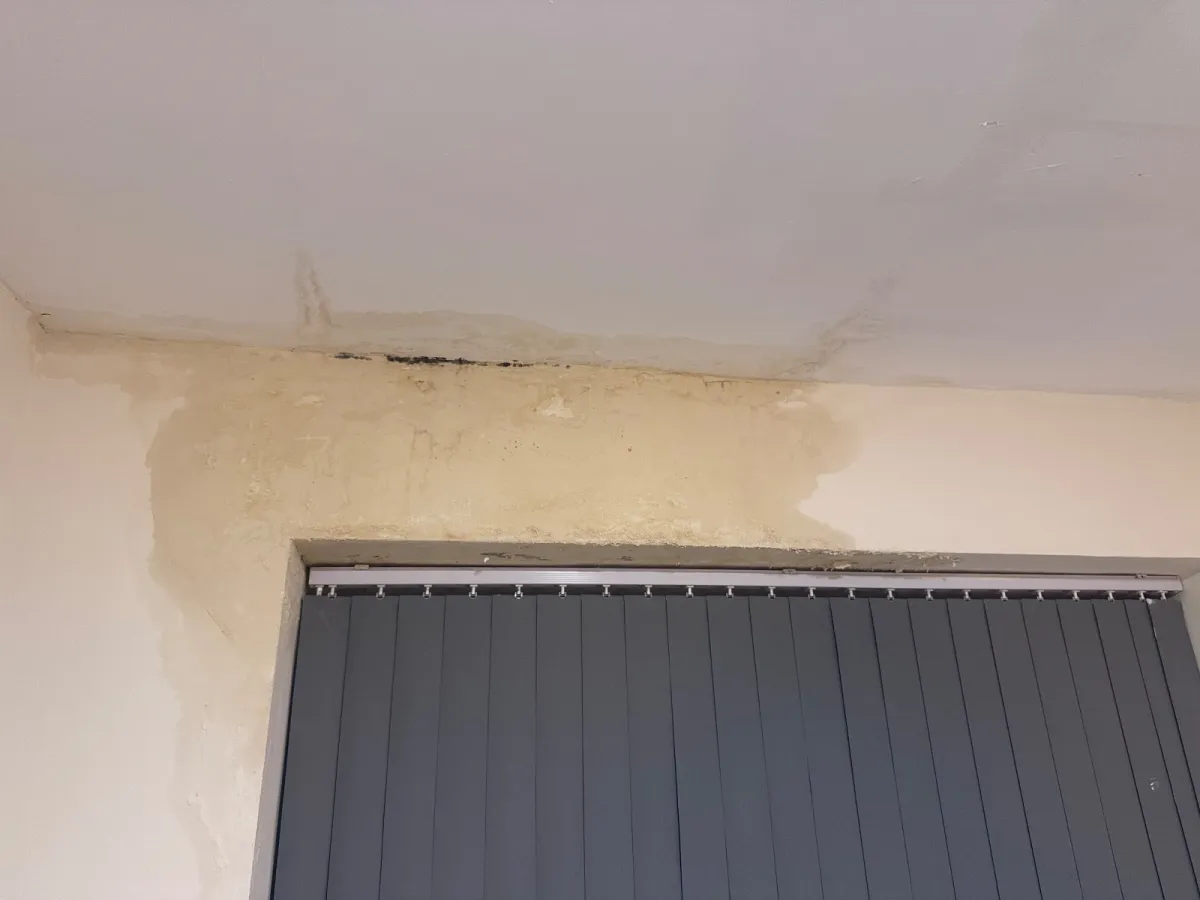
The room below had staining on the walls beside a window, peeling plaster and damp patches, and water was still arriving while the visit took place. The record describes the staining as long-standing.
The photograph of the ceiling corner shows the stain spreading across the ceiling and down the wall above a vertical blind. Where a stain appears is not where the water starts, because water travels along structure before it shows, and in a wet room the damp shows far from the cause for the same reason. The stain says that water is coming through; it cannot say which fitting above is responsible.
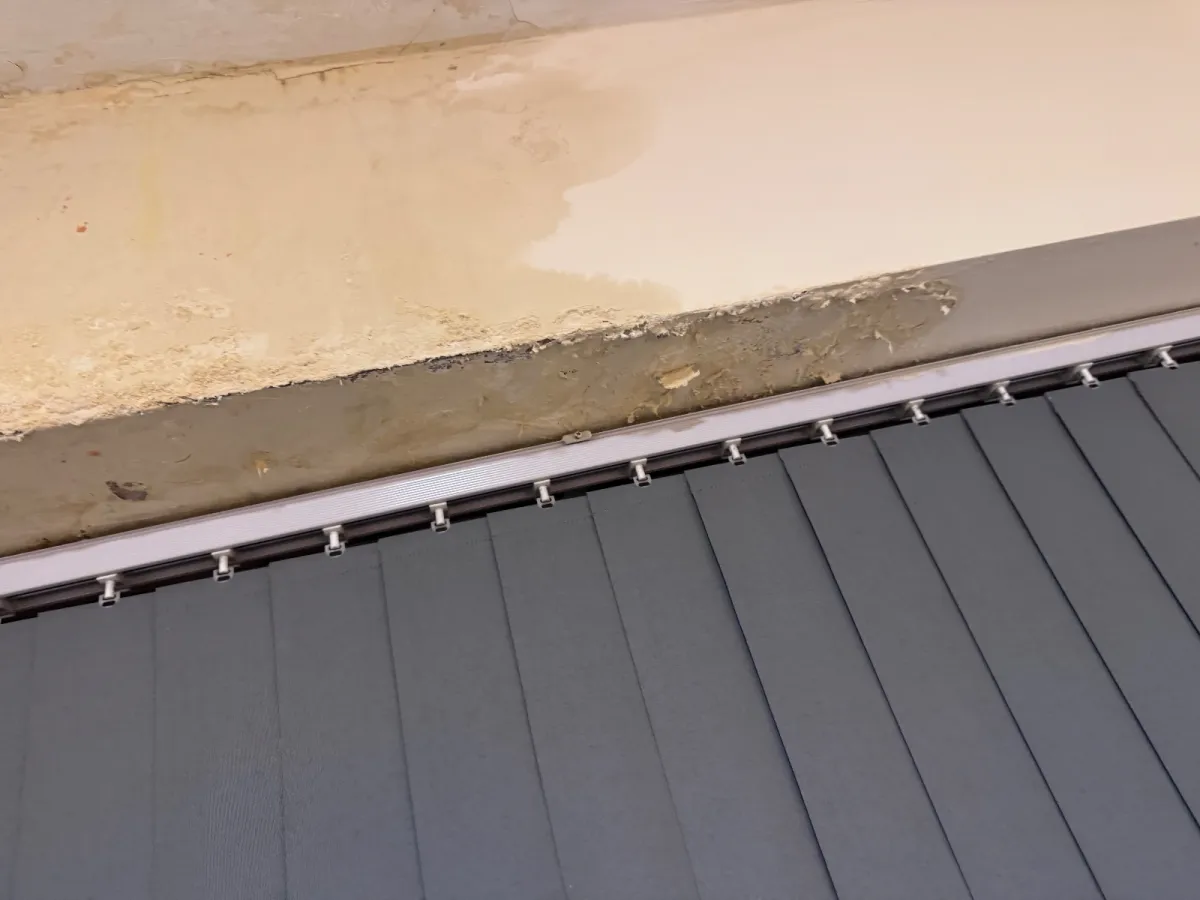
Two further photographs show the same room from nearer. One looks at the wall above the blind, where the plaster is peeling and the stain ends in a clear tide line. The other looks along the junction of ceiling and wall, where there are brown tide marks and a line of dark spots along the edge.
They matter because they show the stain as a tide line and not a single mark: damp that has dried and been wetted again leaves an edge, and the record describes both long-standing staining and active water. The photographs record what the surfaces looked like; they do not say how much water was involved.
The way up was a visual survey of the flat above, in the manner of a trace and access survey, looking at what sat over the damaged room. The shower enclosure was the obvious candidate and it gave the answer without a camera or a gas test.
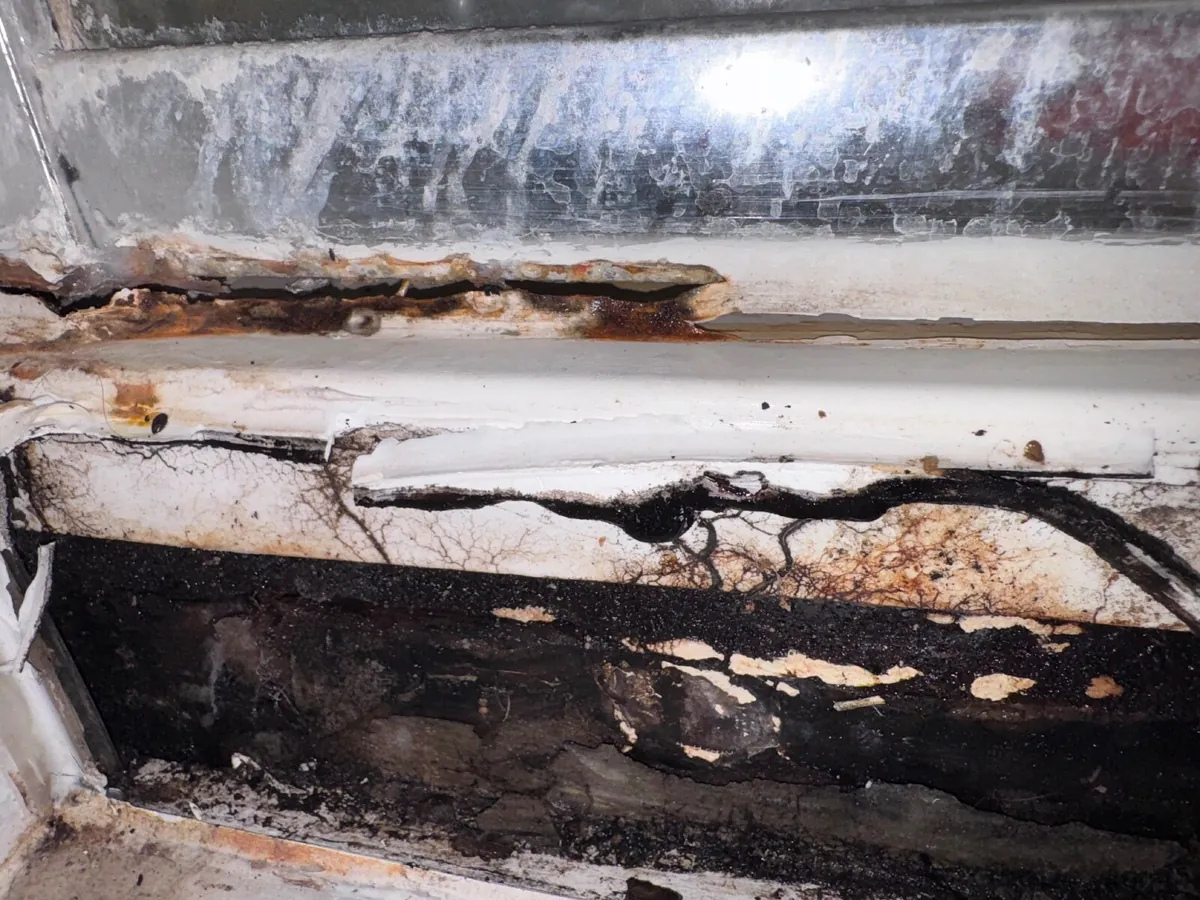
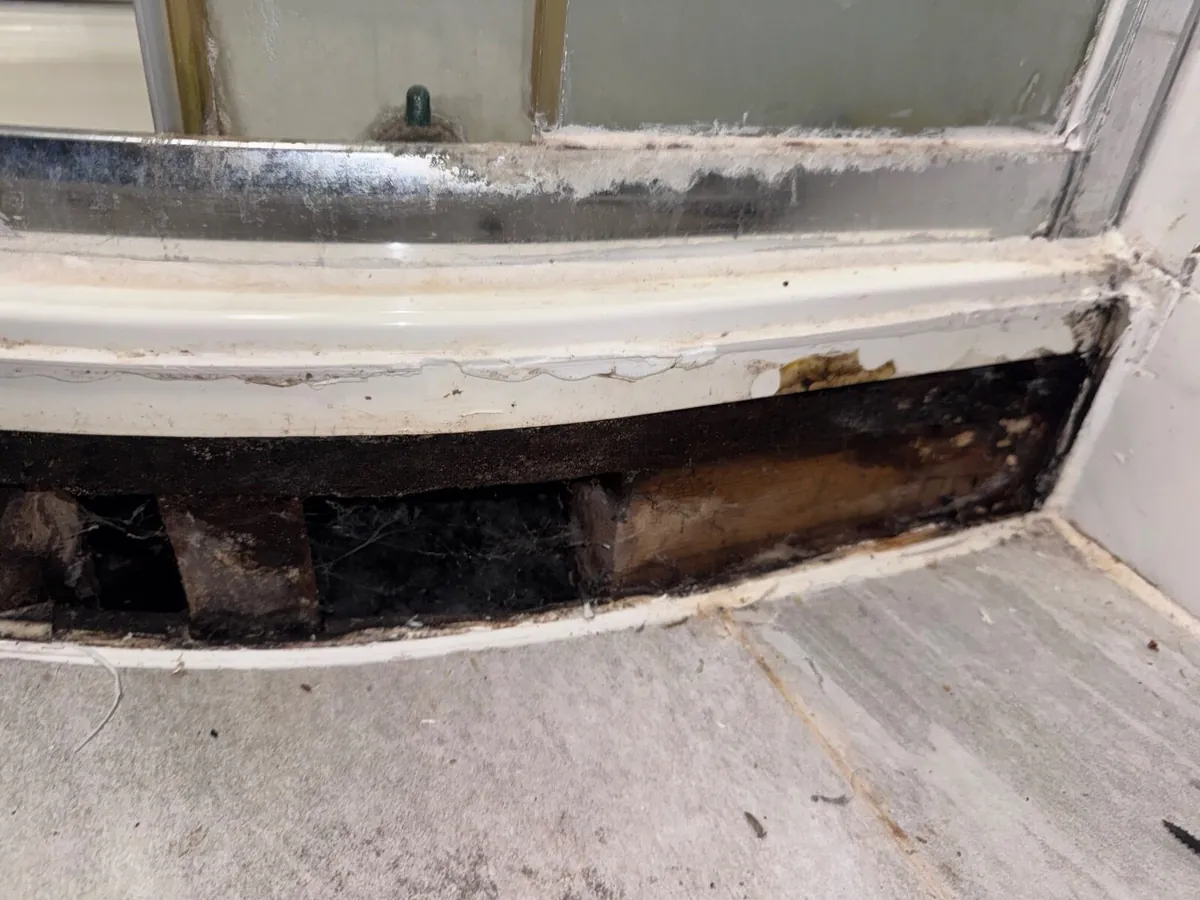
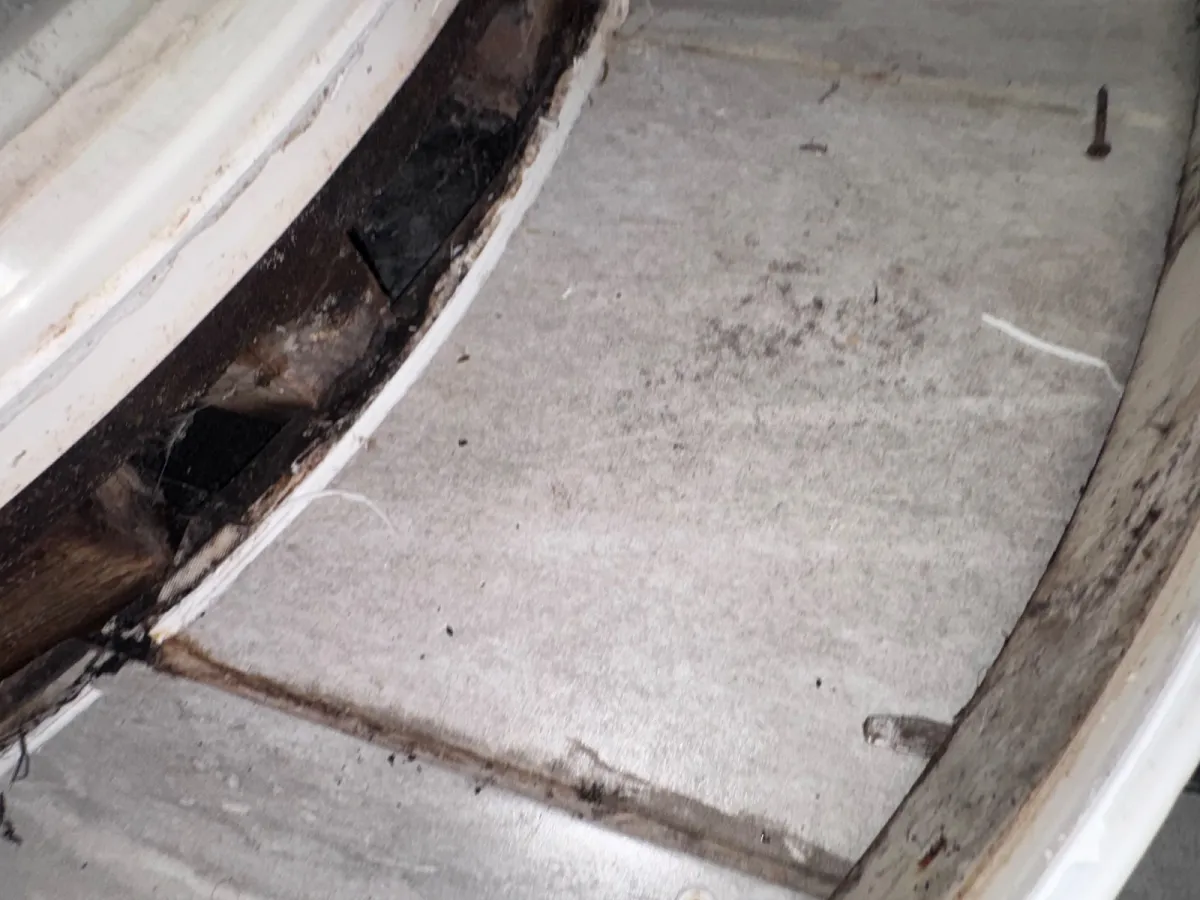
The shower tray had dropped and cracked, and the seal where the enclosure meets the tray had failed. The photographs show the tray edge sitting above an open gap, with dark rotted timber blocks and cobwebs beneath it, and a second view of blackened timber and mould under the edge with rust on the metal frame above.
Four more photographs record the area around the tray. One looks into the void beside the raised tray edge, where dark timber and a rusty nail sit above the floor tiles. It is the same rot seen from another side, and it fits the record of rot and mould under the edge.
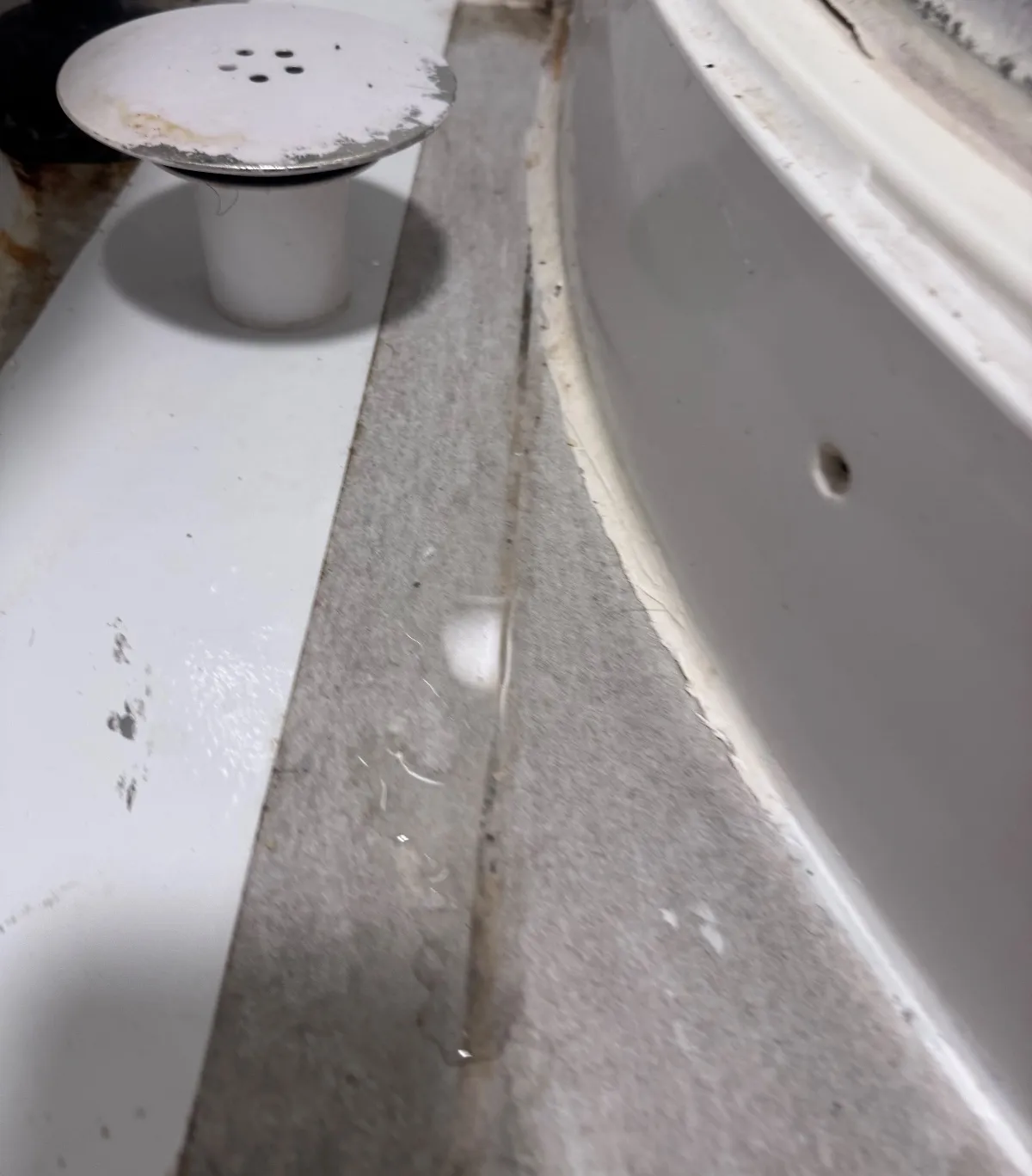
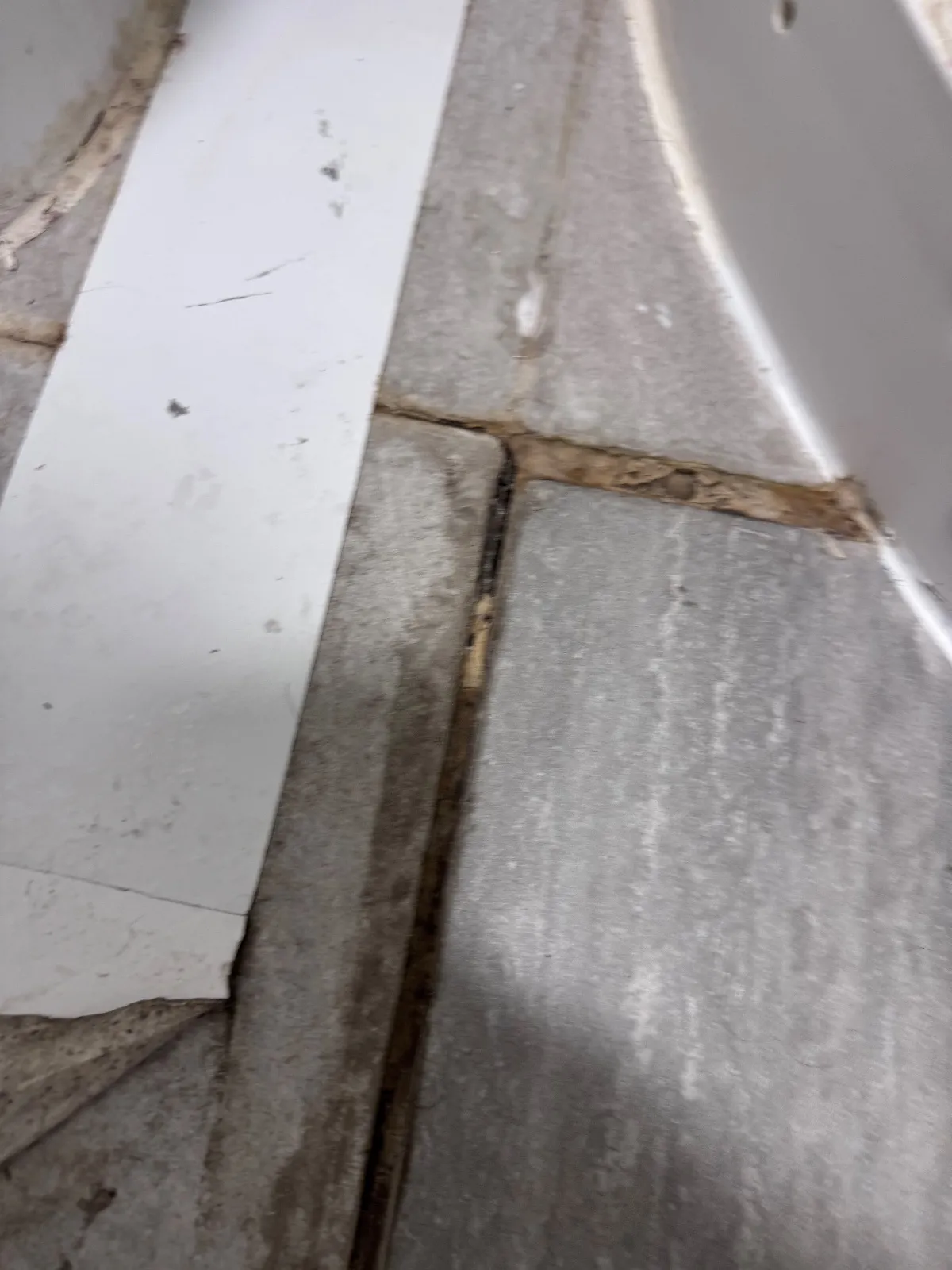
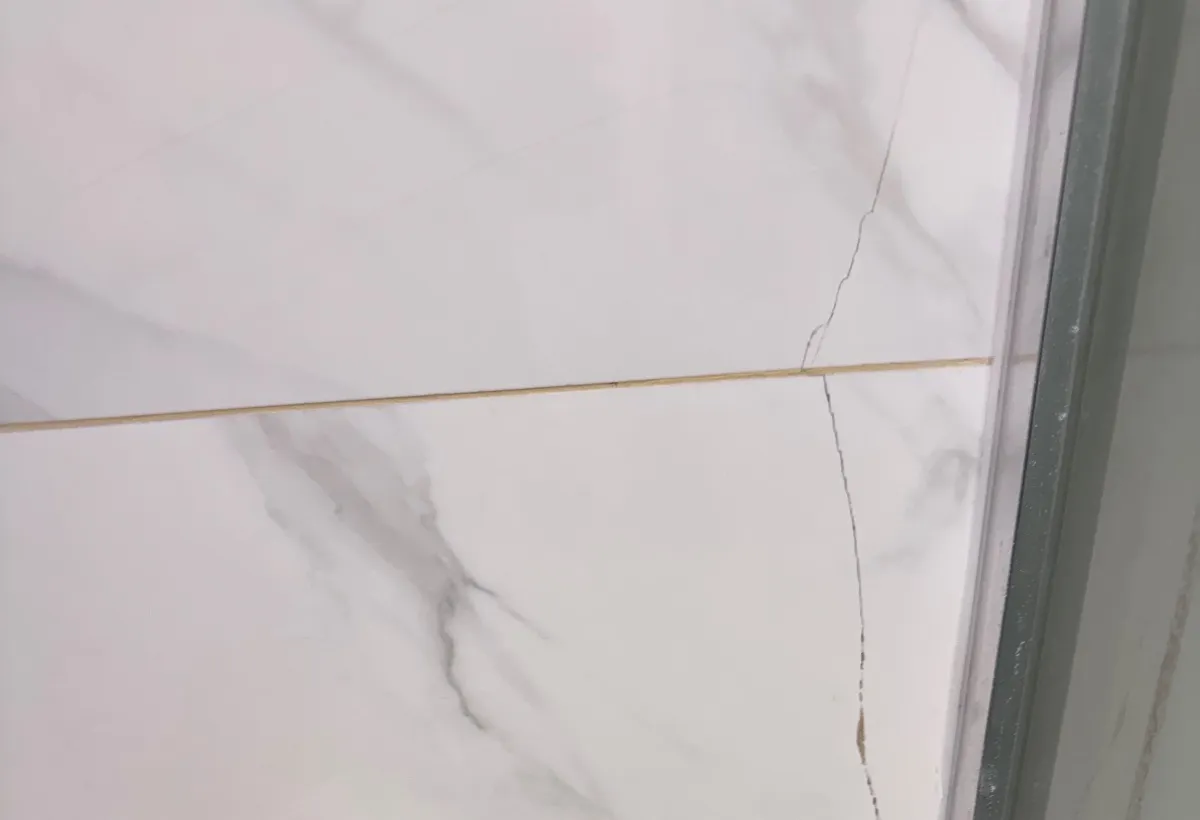
With the waste cover lifted off its outlet, the photograph of the floor strip shows the gap along the tray side and the floor tiles next to it. A second floor view shows an open, stained joint between grey tiles running up to the curved side of the tray. A fourth shows a hairline crack running down through the wall tiles beside the enclosure frame.
Each of these is a visual record, not a measurement. The record does not say the crack or the tile joint carried water, and a photograph cannot show that. What they show together is a shower area with visible damage in more than one place, which supports the advice that sealant would not have been enough.
When a seal fails, the usual reflex is to run a bead of sealant along the joint. Here that would only have bridged a gap above a tray that had already moved, and the rot under the edge shows what the water had already done to the timber.
The record advises no temporary repair. The shower was to be taken out of use until the tray and enclosure were replaced, the damaged areas dried and restored, and a controlled water test run after fitting. A controlled water test usually means running water through the new installation under observation, so any escape shows before the room is closed up again.
In a flat-below case the person with the damp wall and the person with the shower are usually different people, and neither can see the other’s side. A photograph of rot under a tray edge is the thing that can be shown to both, because it helps settle whose problem it is. When water has reached another flat, the escape of water claim steps set out what to record, and cover depends on the policy.
The same pattern appears in another leak into a flat below in CR8, where the cause was a joint under the shower and not the tray. Both are described on the shower tray leaking guide, which also covers what you can check without opening anything. For a newly fitted bathroom, the first month after a refit shows which joints leak, and when. A different fitting has its own signs: see electric shower leaking.
The visit located the cause and showed the damage. It cannot say how many months the tray had been dropping, and the record does not say what the replacement and restoration cost or involved. Those are for the trades and the building’s own arrangements, and restoring the stained walls below is quoted by a partner team, as leak damage repair and remediation describes.
It also cannot say that every flat-below stain comes from a tray. Some come from a waste, a supply or a different flat entirely, and the order of checking matters, which is why a survey starts by looking and not by cutting. The cost to find a bathroom leak is set out source by source, and the fixed-price package covers one property.
About this example: it is written from a visit recorded in the operator’s own job records, made before Leak Experts London was launched. Leak Experts London is a new company with no trading history, so this page shows how a search was carried out and is not evidence of the company’s own track record.
Not on a tray that has dropped and cracked. The record for this job advised no temporary repair and said the shower should be out of use until the tray and enclosure are replaced.
It usually means running water through the new installation while someone watches for any escape, so a fault shows before the room is made good. The record asks for one after the new tray and enclosure are fitted.
The record advises against it. A shower with a failed seal sends water into the floor each time it is used, and in this case that water was reaching the flat below.
A leak into the flat below was traced to a shower waste pipe that had come apart from its trap. An endoscope passed through one small opening in the lower…