Case studies · TW4
Cracked Shower Tray Leaking Into the Flat Below: Rot Under the Edge
Staining and active water on the walls of a flat below came from the shower upstairs. The tray had dropped and cracked, the enclosure seal had failed, and there…
all of Greater London, 24/7
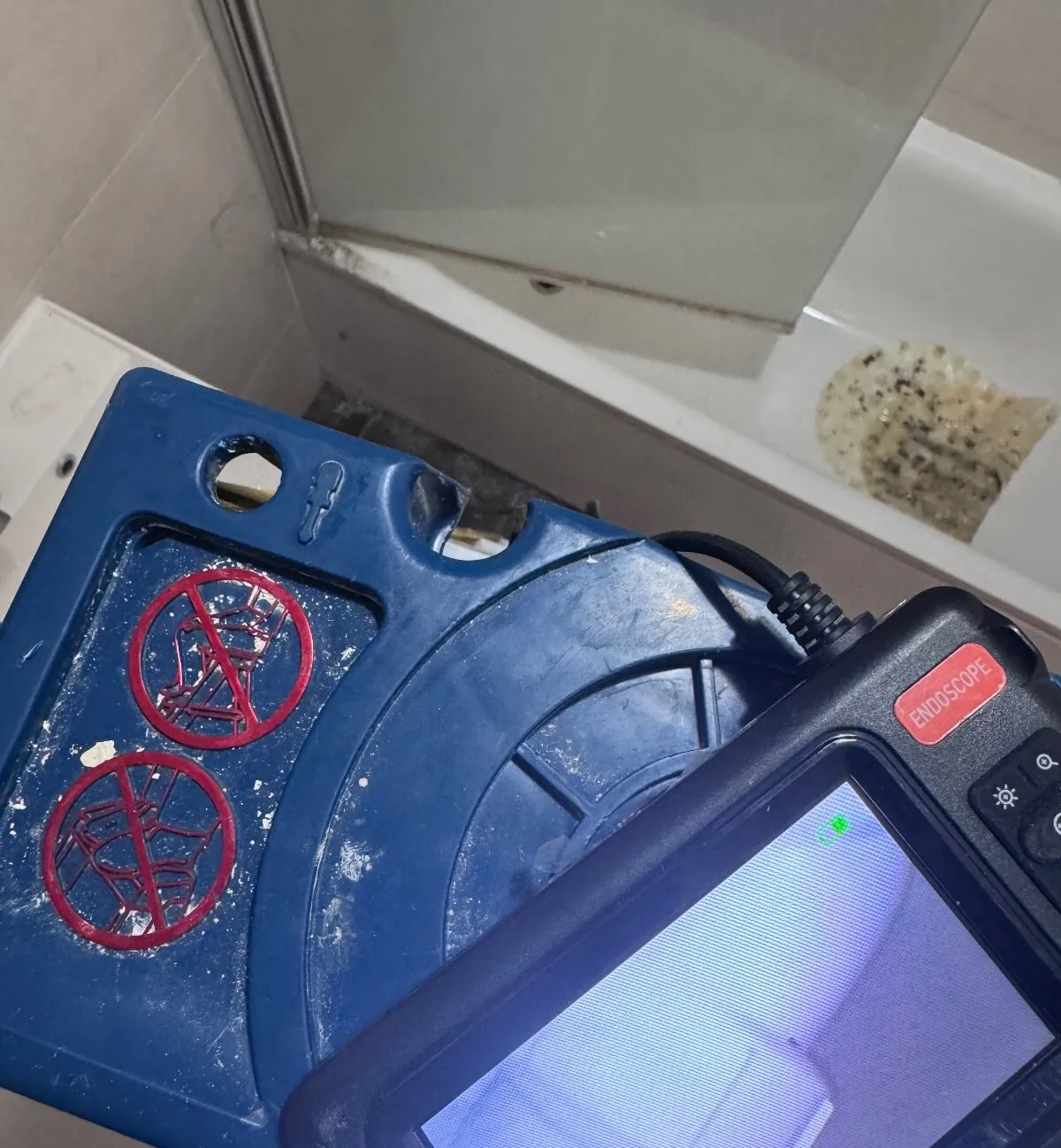
A leak into the flat below was traced to a shower waste pipe that had come apart from its trap. An endoscope passed through one small opening in the lower flat’s ceiling showed the separated joint with the shower running, so the cause was confirmed before any larger opening was made.
Before the visit, a plumber had said the bathroom waste was probably at fault and that the way in would have to be from the flat below. That was a reasonable guess, and it was only a guess. Cutting into a ceiling on a guess leaves a hole whether or not the guess was right.
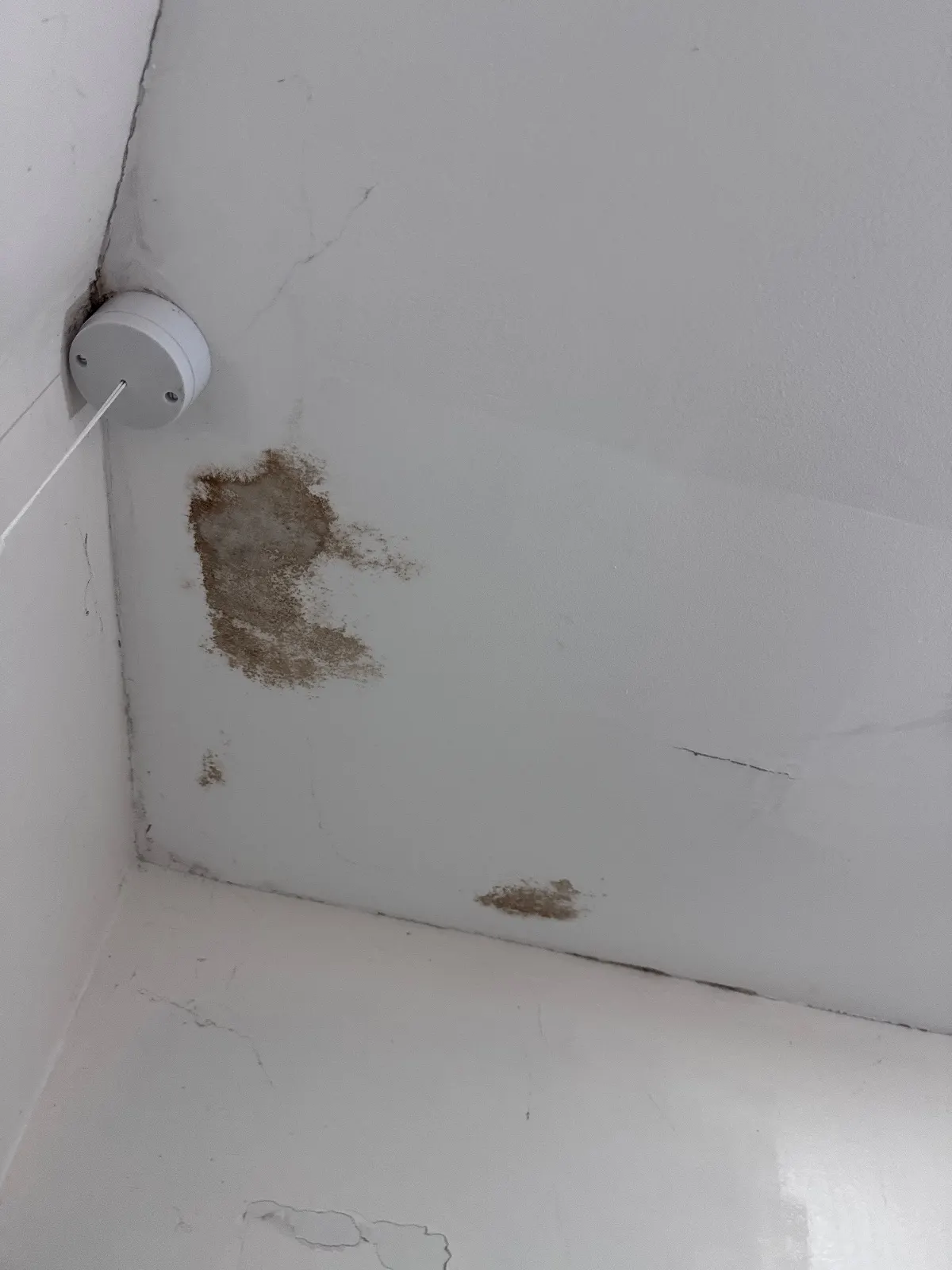
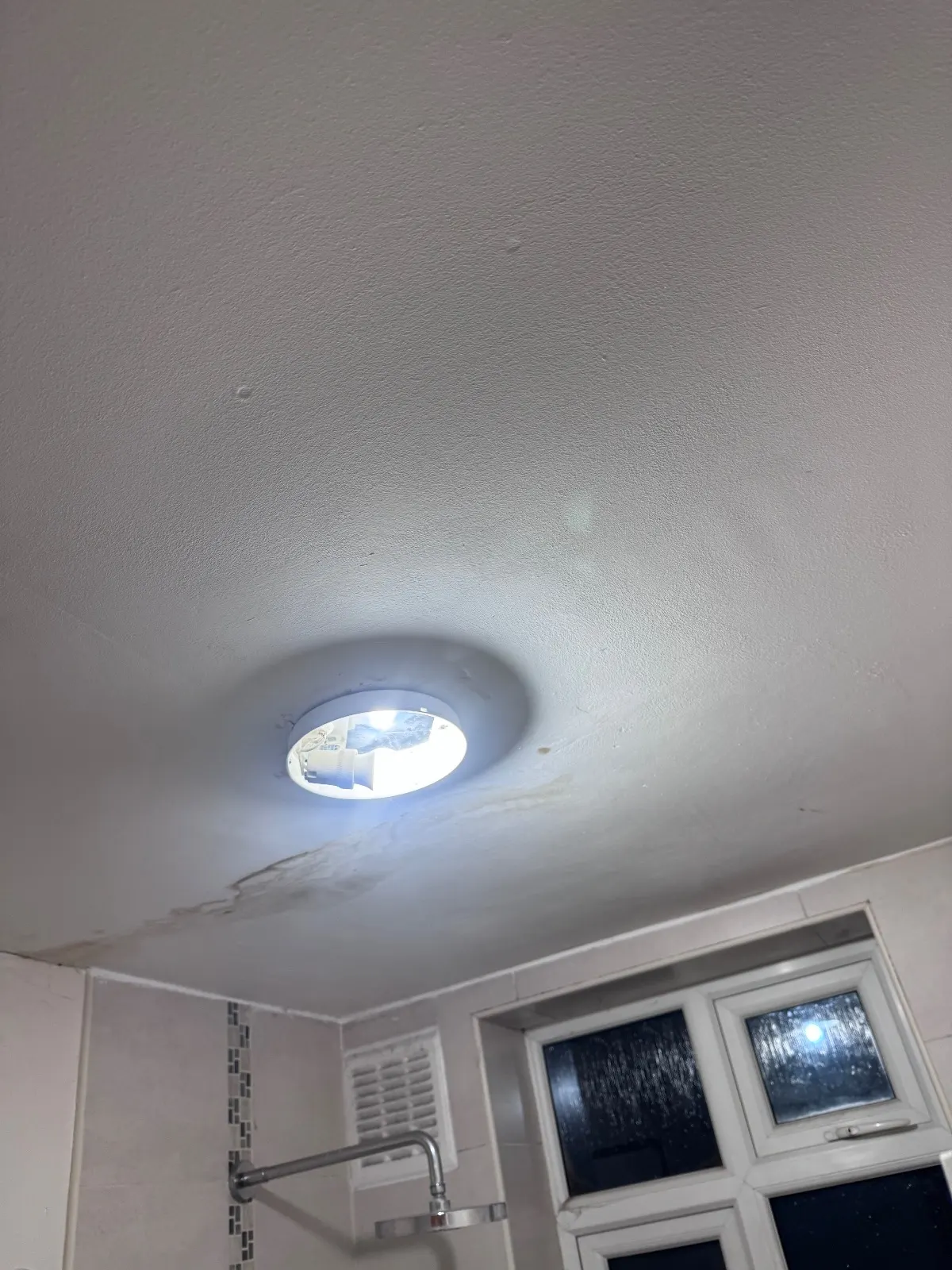
The first step was to look at the ceilings in both flats. The lower ceiling already carried brown staining, so the water was arriving there. What the ceilings could not say was which pipe or joint it was coming from. The staining was not one neat patch: one photograph shows brown blotches in a corner beside a pull-cord switch, and another shows a brown tide mark curving across a bathroom ceiling past a light fitting.
Those marks were the starting evidence, and they were also the limit of it. A tide mark records where water has travelled and dried, and water can run along a ceiling and a lath before it drips, so the stain on its own does not say which joint is above it.
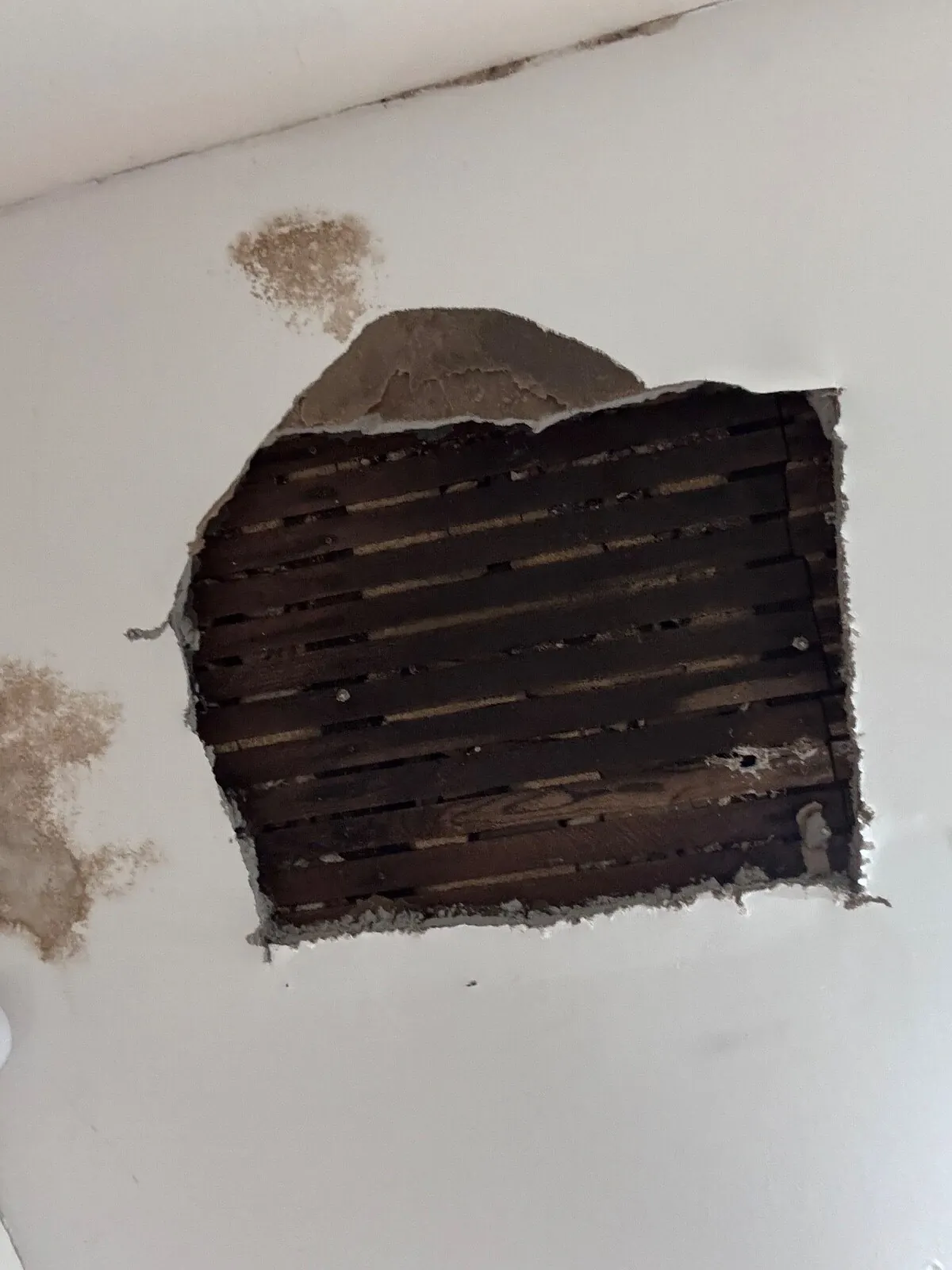
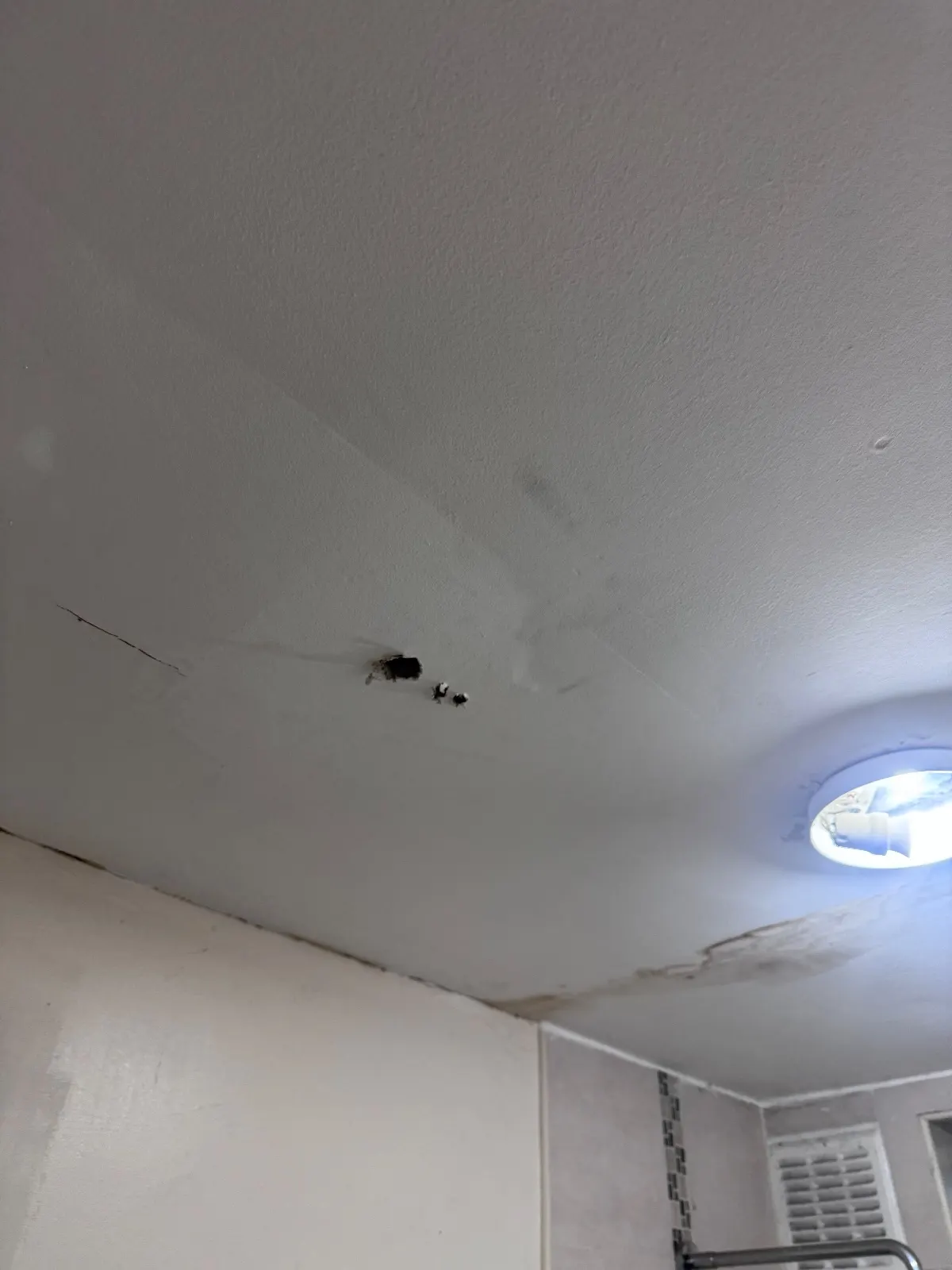
A single small opening was made in the ceiling of the lower flat. The photograph shows it: a lath and plaster ceiling with the laths exposed and brown staining on the paint beside it. Every extra square of opening in a ceiling like that is more to make good afterwards, which is why a camera is worth trying first. Another photograph shows a ceiling with three small holes beside a light fitting: small marks like that are far easier to make good than a large cut-out.
An endoscope is a small camera on a flexible lead with a screen at the other end. It was passed through the opening to look at the waste pipework under the shower, and the shower was run while the camera was held on the joint. A camera sees one direction at a time, so running the water is what turns a still picture of a joint into evidence of a leak.
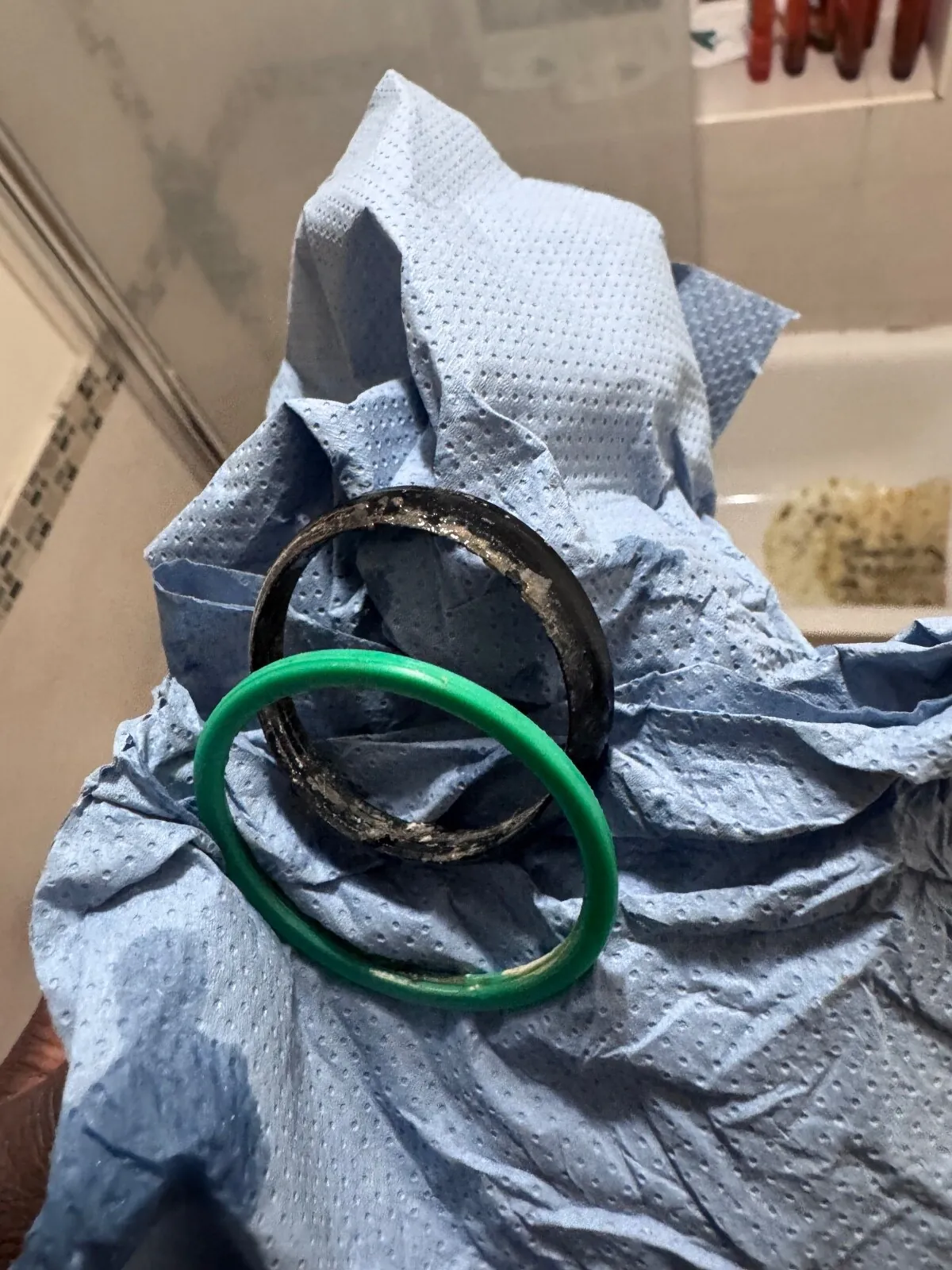
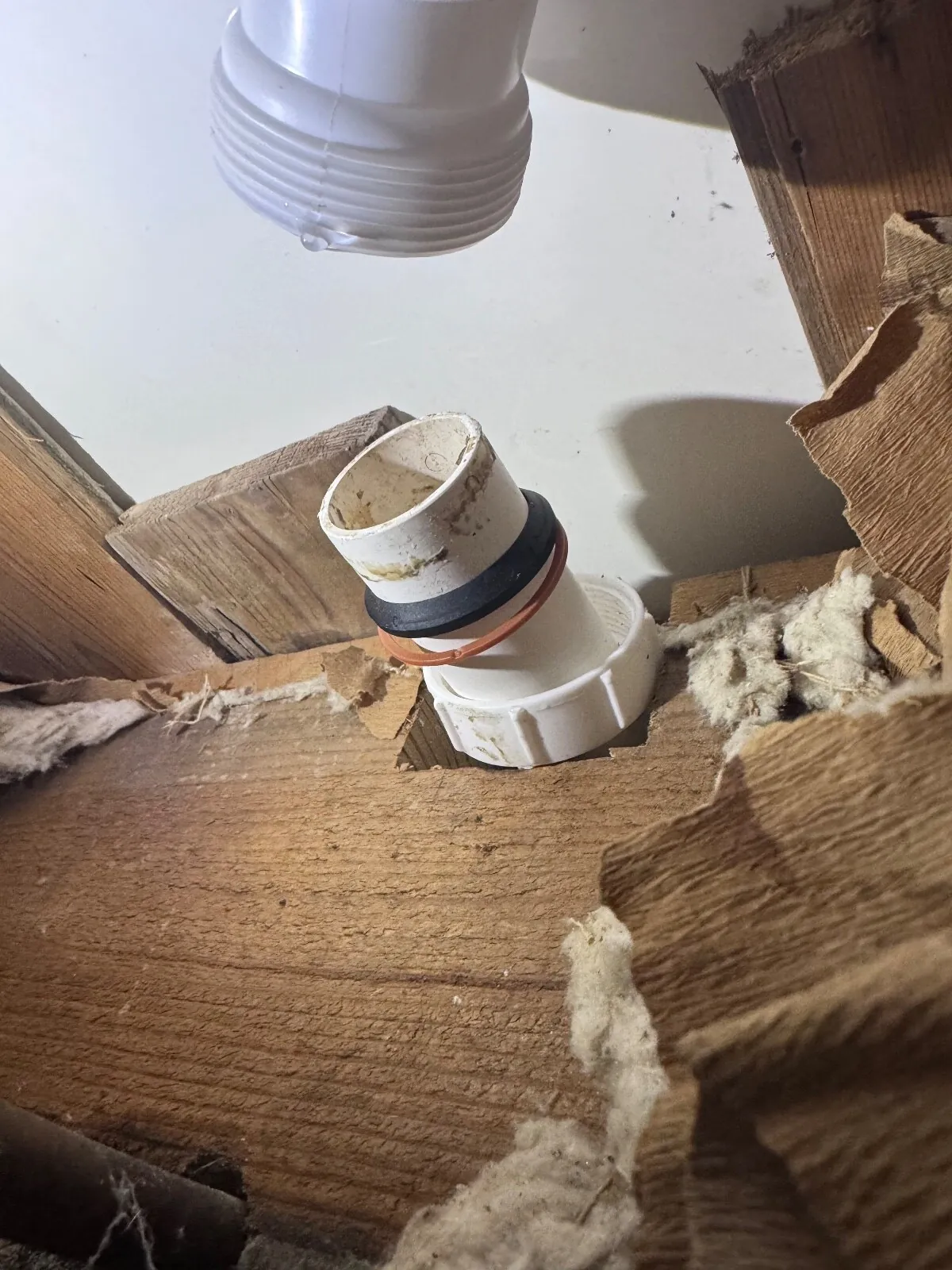
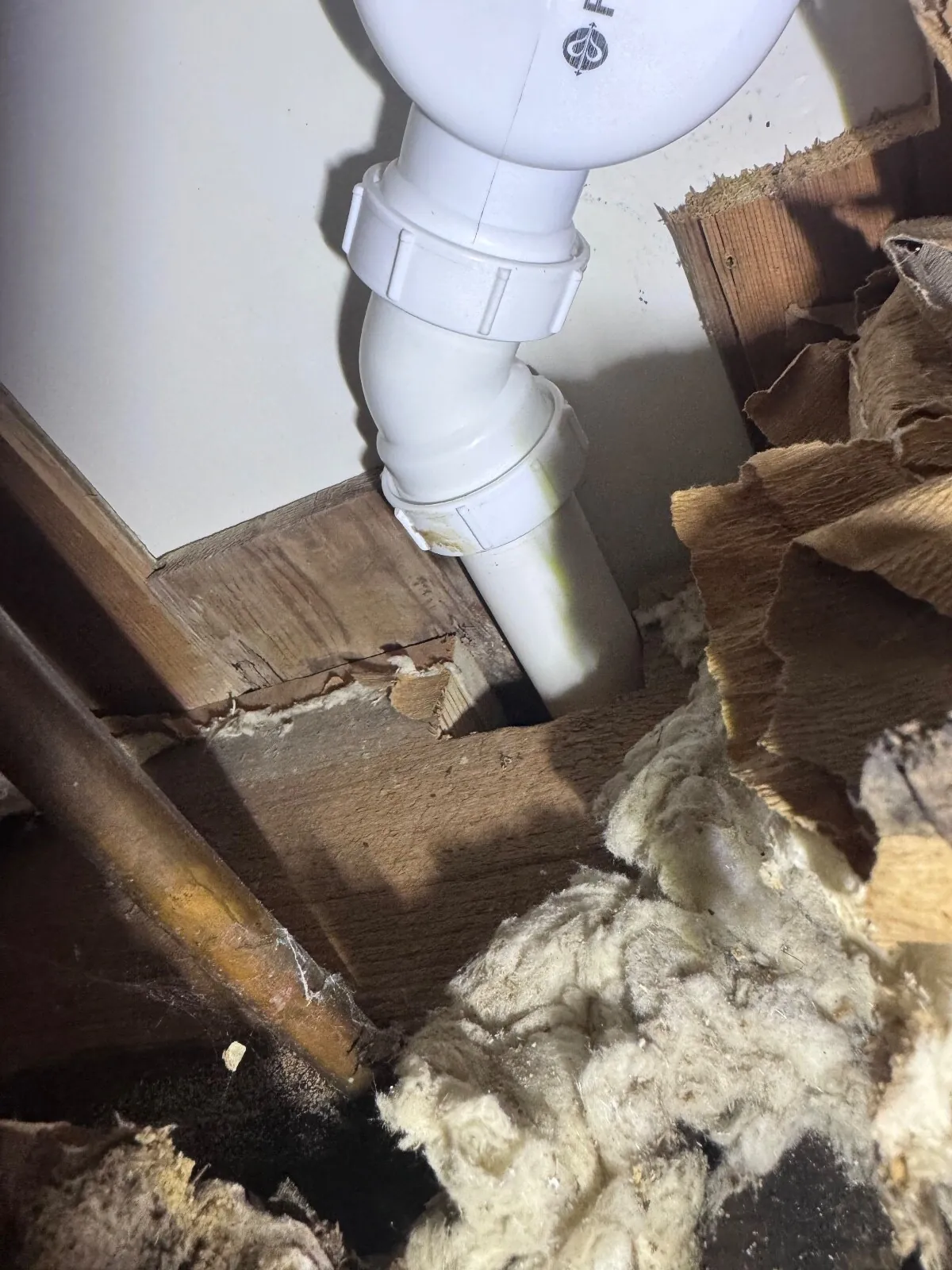
With the shower running, the shower waste pipe was seen to have separated from the trap. The photographs from the void show the pipe end standing out of its nut, the trap with its union nuts, and the sealing rings that had been on the joint.
The old washers had degraded and the nuts had loosened. A joint held by compression depends on both, and together they explain water reaching the ceiling below each time the shower was used.
The record advises re-sealing the opening in the ceiling to a proper standard and monitoring the area for a month, and making good of that kind is described under leak damage repair and remediation. The work on the joint itself is not described here, because locating the leak is the work this page covers.
The monitoring advice is the part worth noticing: a joint that tests dry on the day has passed one test, and a month of watching is how a slow weep shows itself. A log of readings is the way to keep that watch.
Leaks into the flat below have different causes from one case to the next. Here it was a waste joint. Another case on this site was a cracked shower tray in TW4, and another a hot water supply loss across two visits where the pipes tested clear and the shower area was the likelier source.
The common thread is that the person with the damp ceiling and the person with the shower are usually different people, so a photograph of the cause is what makes a conversation between them possible. A trace and access survey is built around producing exactly that, and the fixed-price package covers one property. Before booking any firm, the eight questions to ask are worth reading.
About this example: it is written from a visit recorded in the operator’s own job records, made before Leak Experts London was launched. Leak Experts London is a new company with no trading history, so this page shows how a search was carried out and is not evidence of the company’s own track record.
Sometimes. Here one small opening in the ceiling below let an endoscope see the waste joint under the shower while it ran, so the bathroom did not have to be opened first. It depends on a clear line of sight to the joint, which not every void gives.
A joint that is dry in a still picture can leak under flow. Running the shower puts water through the waste while the camera is on it, which is how the separation showed as a leak and not only as a gap.
A small repair, such as tightening a fitting or replacing a small part on the pipe, can be done on the same visit once the leak is found, and a larger repair is quoted before any work starts, and the leak is stopped in the meantime, as leak repair after detection sets out. This page covers only the finding. The record for this job advises a month of monitoring afterwards, because a joint that tests dry on the day has passed one test.
Staining and active water on the walls of a flat below came from the shower upstairs. The tray had dropped and cracked, the enclosure seal had failed, and there…