Hydrogen Tracer Gas Heating Leak Case Study: A Boiler Losing Pressure
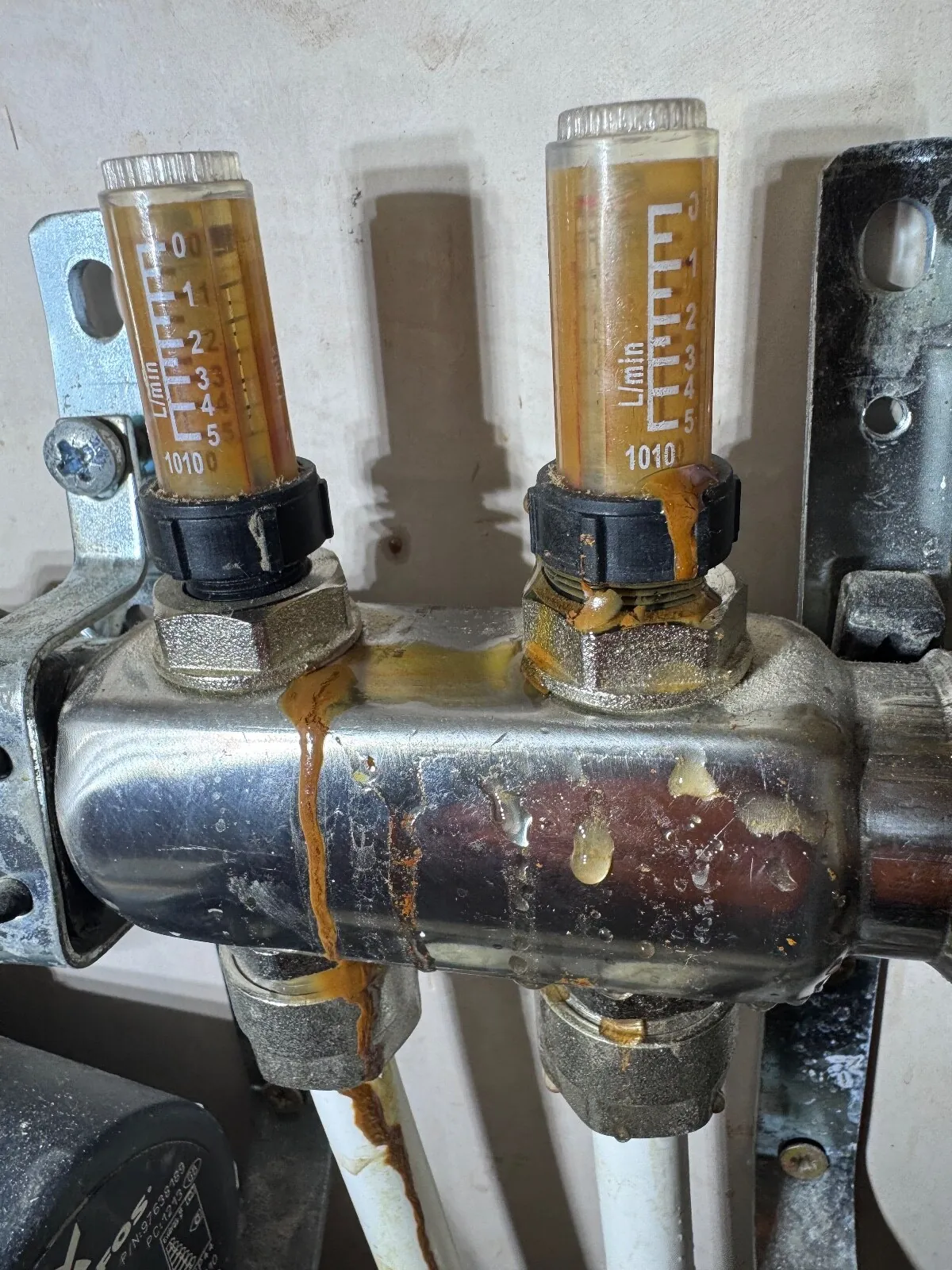
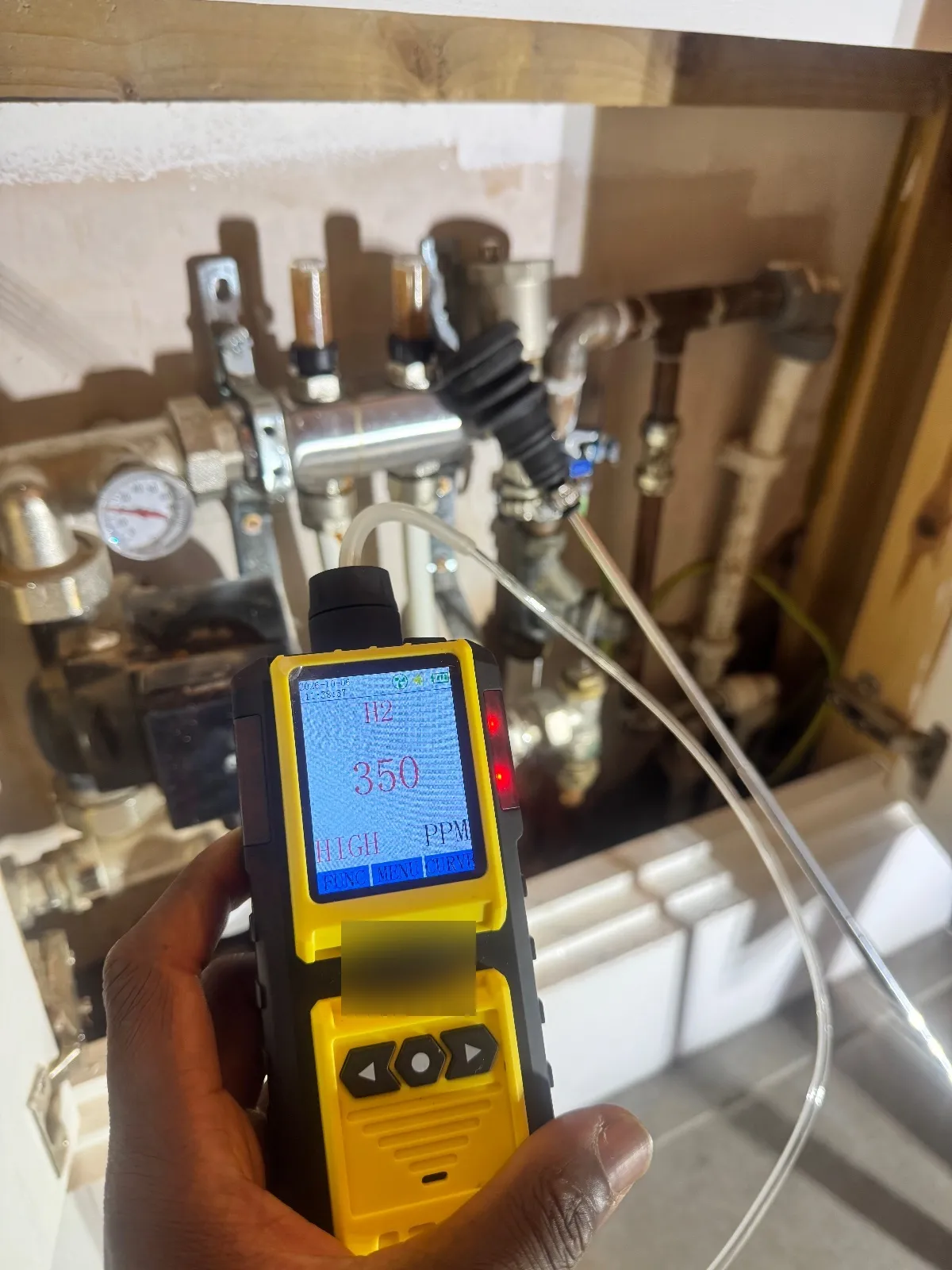
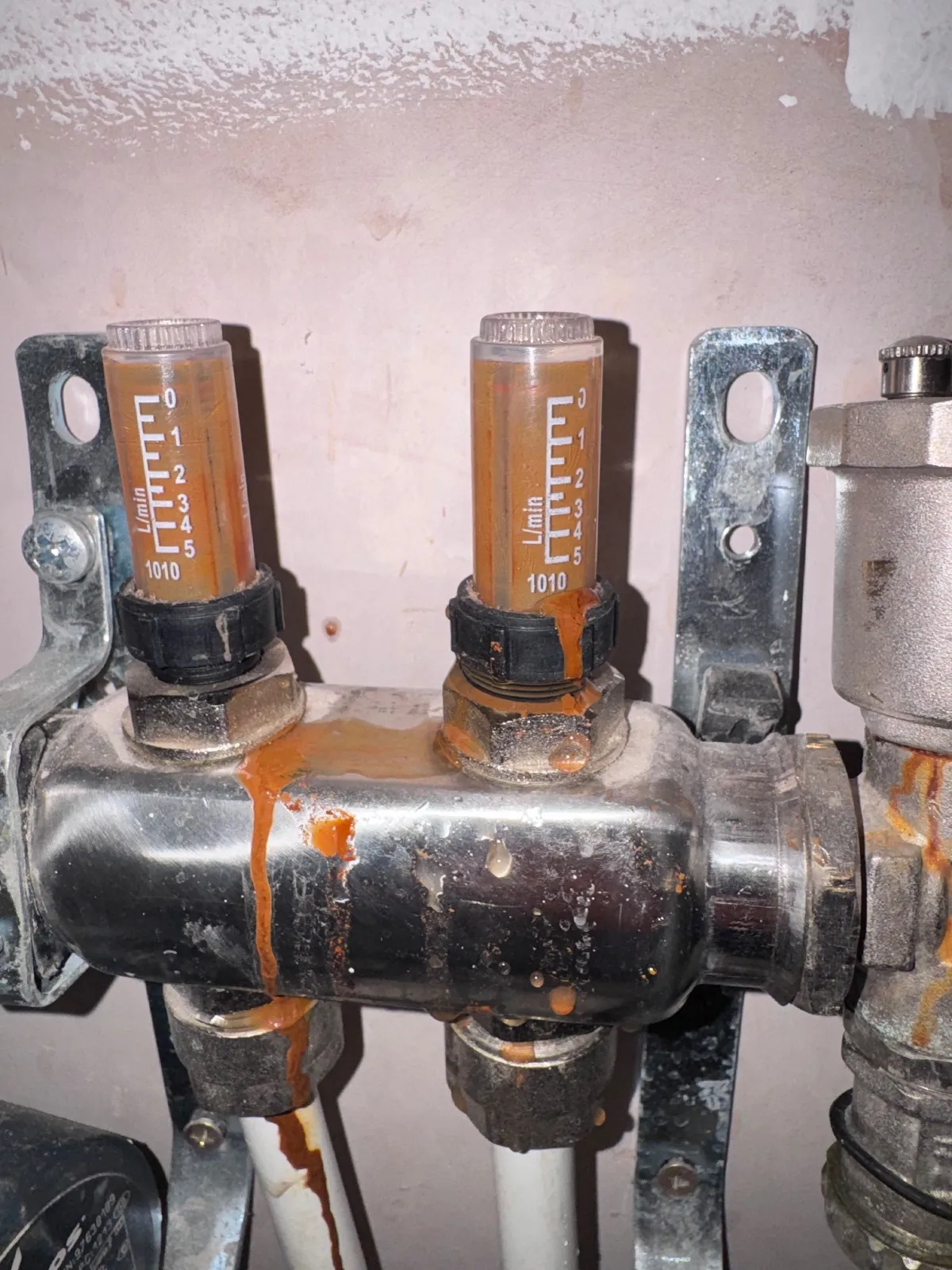
A boiler that keeps dropping to about 0.5 bar is not always a boiler fault. On this job a hydrogen tracer gas test on the heating circuit read high at an underfloor heating manifold, where a flow meter was seen leaking, with orange staining and water running down the pipework. The photographs show the readings and the finding.
Job record
- District
- SL9
- When
- October 2026
- Property
- Home with underfloor heating and a manifold cupboard
- Seen
- The boiler was found at about 0.5 bar after being topped up the evening before, and a previous heating engineer had already attended.
- Methods
- tracer gas
- Found
- Hydrogen readings were elevated at the underfloor heating manifold, where a flow meter was seen leaking, with orange staining and water running down the pipework.
- Outcome
- Located inside the property
A boiler at 0.5 bar the morning after a top-up
Pressure had been topped up the evening before and had fallen to about 0.5 bar again, and a previous heating engineer had already attended. Topping up a sealed heating system hides the loss without explaining it, so the useful question was where the water was going.
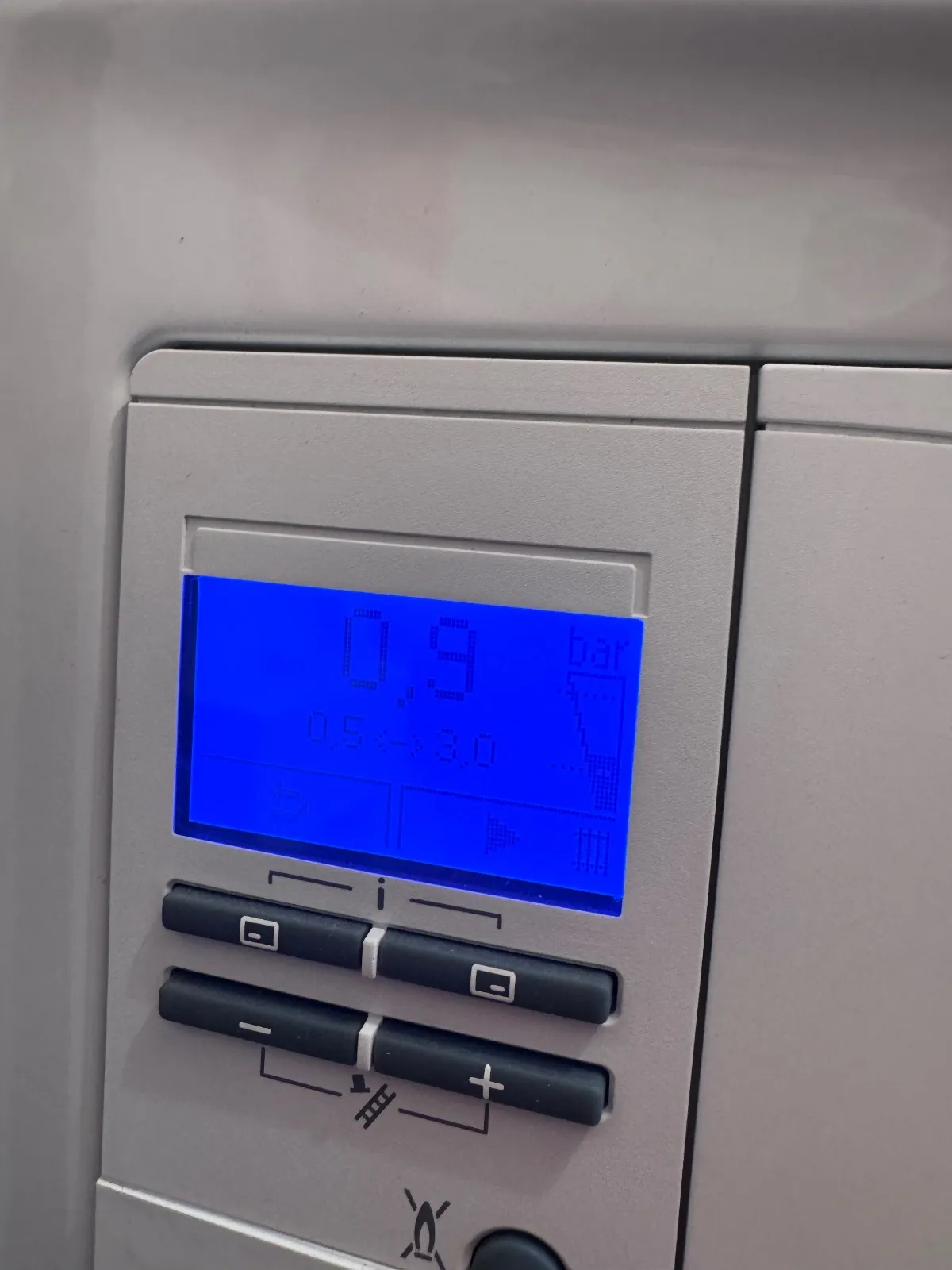
A visual check of the ground floor found nothing obvious. Nothing was stained, nothing was dripping where a person could see it. The boiler display photographed on the visit shows 0.9 bar, inside the 0.5 to 3.0 range printed on the screen, and it is a reminder that the figure on its own does not say whether water is being lost. That is where a hydrogen tracer gas test earns its place, because it does not need the leak to be visible.
This job was outside Greater London, in SL9. It is included for the technique, and no London borough is named for it.
How the hydrogen test was run
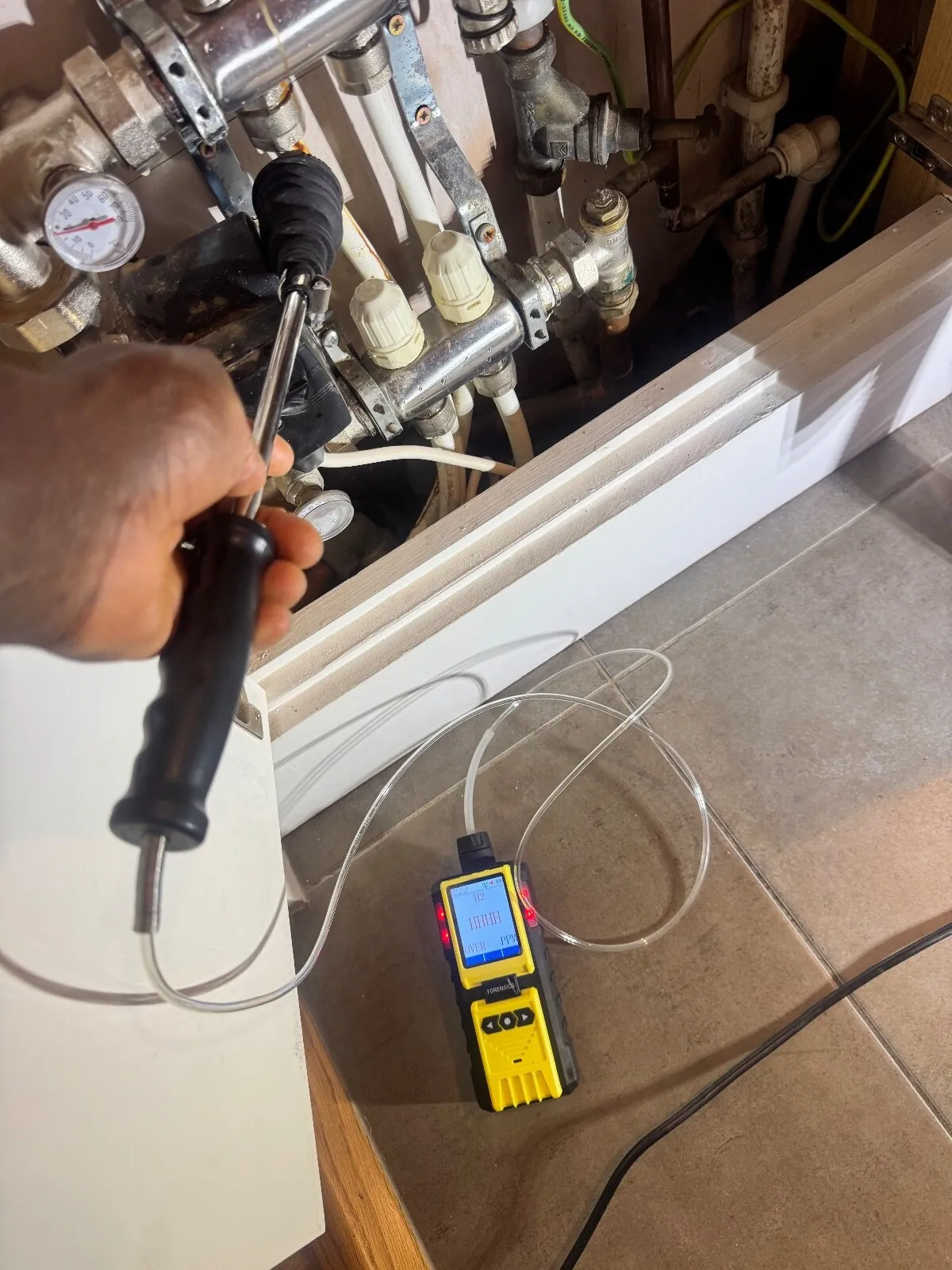
Tracer gas was put into the heating circuit, as explained here. The cylinder has an industrial name, covered under forming gas, and forming gas versus helium compares the two tracers. A handheld detector draws air through a thin sampling tube, and a probe on a long handle lets the operator place the tube tip right against a fitting.
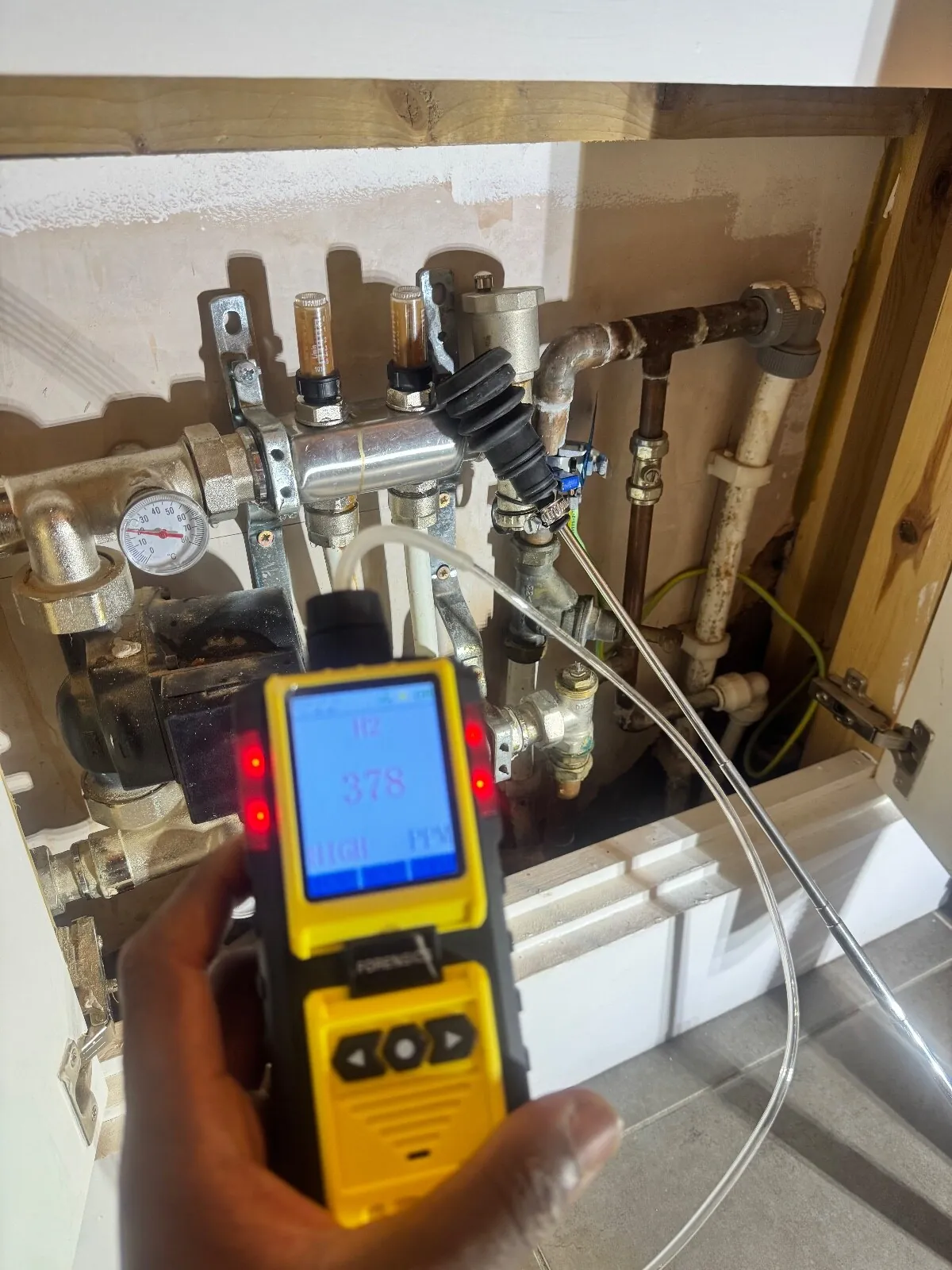
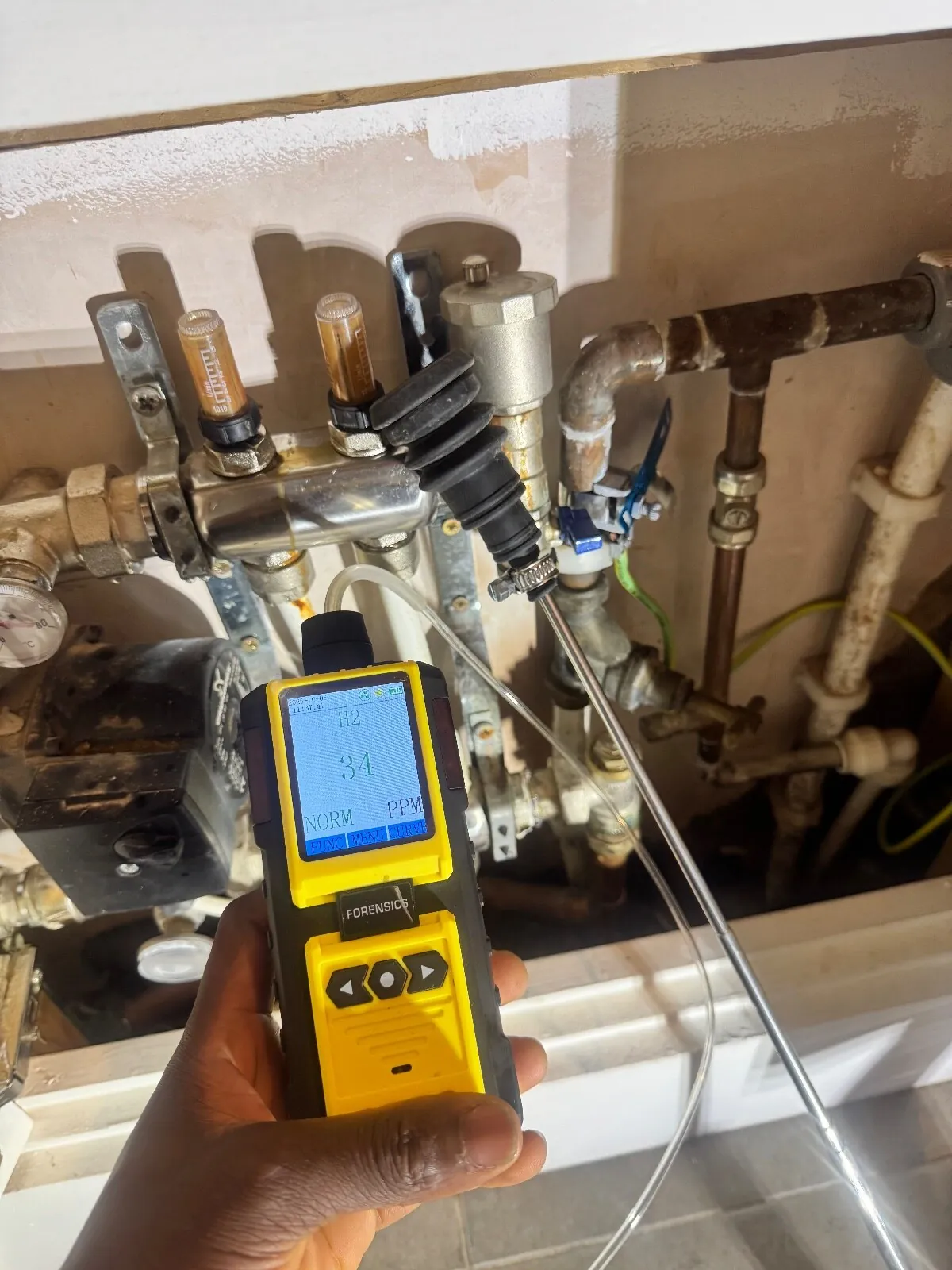
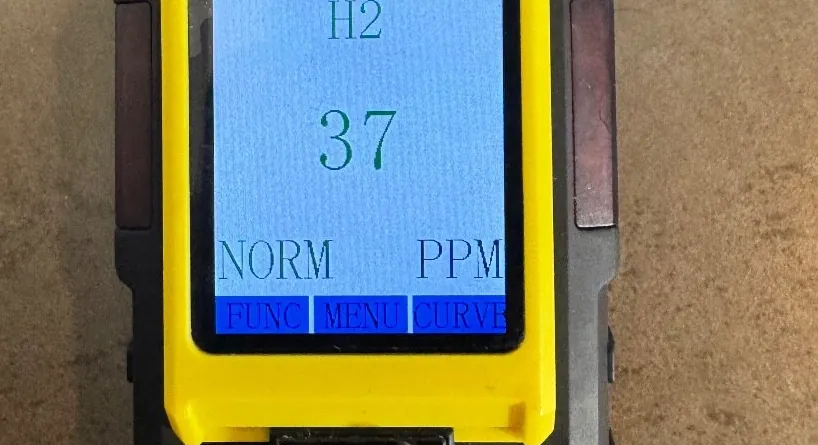
The detector shows hydrogen in parts per million. At the manifold it showed 378 and flagged HIGH. At a fitting nearby the same instrument showed 34 and marked NORM, and a reading of 37, also marked NORM, was photographed on the floor beside the sampling tube. A further photograph, with the tube tip at the pipework on the right of the cupboard, shows 350 and HIGH.
Those numbers are specific to this detector, this room and this day. They are not a threshold that applies to any other job, and a high figure says only that gas is escaping near the probe. It does not by itself say which joint.
The gas goes in at one point and escapes at another. The reading says where to look; the eye or a pressure test then has to confirm what is there.
What the readings pointed to
With the probe held around the manifold, the high readings gathered at the flow meters. Looking at them closely showed the cause: a flow meter was leaking, with orange staining down the manifold body and water running down the pipework beneath.
The photograph of the flow meters shows the staining and the droplets on the metal, and a wider view shows the same orange marks at the fittings of both flow meters, on the manifold body and on the pipes below it. The staining is rust-coloured, the kind of mark left where heating water has been escaping, which fits a boiler that kept needing a top-up.
Here the gas and the eye agreed, and that is the best case. When a reading is high and nothing is visible, the next step is a smaller opening, not a guess.
What was and was not done on the visit
No repair was carried out on the visit. The record recommends repair or replacement of the flow meter, then a refill, a pressure test and monitoring afterwards. Those are tasks for a heating engineer, and leak repair after detection explains how repairs follow a finding. Finding the leak, as in a heating pressure loss survey, is where the work described on this page stops.
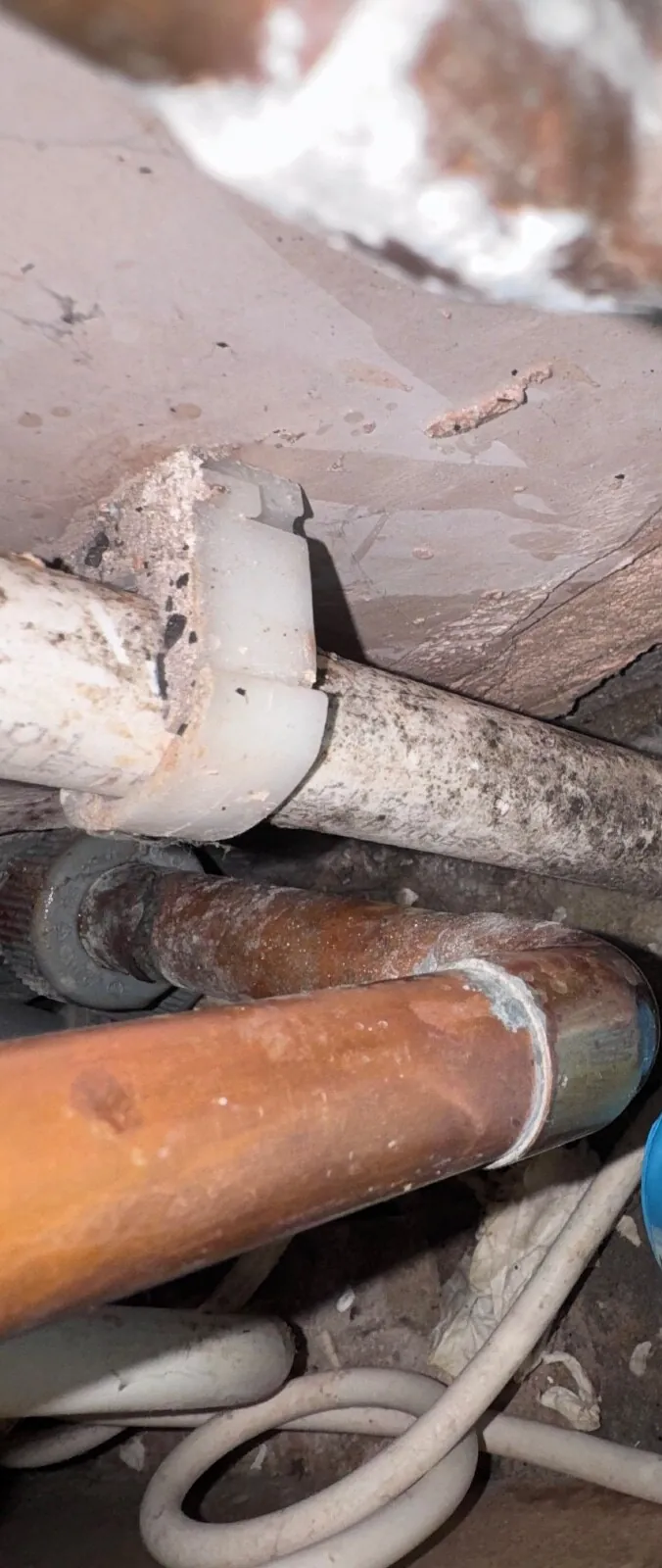
One more photograph shows pipework in a void beneath the floor. It is included because it was taken during the same visit and it shows how much of a heating system is out of sight. It is not evidence of a second leak.
What a single job cannot tell you
One case does not show that a boiler is never at fault when pressure drops, only that here the loss was at a manifold fitting and a gas test was the way to prove it. A system that loses pressure from the boiler itself would not be found this way.
Gas tests also have limits of their own, starting with the need for a circuit that can be filled with gas. Read about when tracer gas does not work before treating any single reading as an answer, and see how readings are interpreted. What arrives on site is described in tracer gas equipment on site. The fixed-price package covers one property, and hourly rate versus package compares the ways to pay. Tracer gas work adds one cylinder charge of £80. No VAT is charged.
About this example: it is written from a visit recorded in the operator’s own job records, made before Leak Experts London was launched. Leak Experts London is a new company with no trading history, so this page shows how a search was carried out and is not evidence of the company’s own track record.
Questions customers ask
Can tracer gas find a leak in a heating system?
Yes, when the circuit can be filled with the gas. In this job the detector read high at an underfloor heating manifold and a leaking flow meter was seen there. Tracer gas narrows a search, and a visual confirmation or a pressure test then proves it.
Does a high ppm reading mean the leak is exactly at the probe?
Not by itself. A high reading means gas is escaping near the probe tip. Moving the probe around a cluster of fittings, as here, is how a reading becomes a position, and the wet staining confirmed this one.
Why was the boiler pressure not simply topped up again?
A top-up hides a loss without finding it, and a system that loses water will keep needing it. Finding where the water goes is the part that stops the cycle, whoever then carries out the repair.